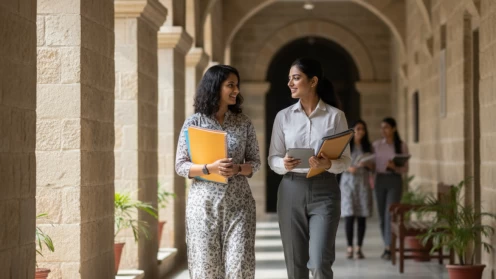
If you are passionate about libraries, information management, or wish to work in academic, public, or digital libraries, the Bachelor of Library and Information Science (B.Lib.I.Sc) through distance mode presents an excellent opportunity. This programme is designed to impart foundational knowledge and skills in library science, including the organisation, retrieval, and dissemination of information. Through distance learning, you can pursue this degree flexibly, balancing your studies with work or other commitments.
The distance B.Lib.I.Sc is a concise, professionally-oriented course, typically completed in one year. Its curriculum integrates both theoretical frameworks and practical applications, focusing on the efficient management of information resources. You will learn about cataloguing, classification, reference services, information technology in libraries, and much more. The programme is especially beneficial for those who are already working or have constraints preventing regular attendance in classroom settings.
One of the key highlights of this course is its accessibility. With the advancement of digital platforms, distance education now offers interactive online lectures, peer forums, and digital library resources, ensuring that you are never isolated in your learning journey. Reputed Indian universities, including Indira Gandhi National Open University (IGNOU), University of Madras, and Nalanda Open University, provide robust B.Lib.I.Sc distance programmes, making quality education available across the country.
Above all, the B.Lib.I.Sc through distance mode is recognised by regulatory bodies and valued by employers, giving you the assurance of credibility as you advance in your academic or professional pursuits.
Course Recognition and Approval Status
One of the most important aspects to consider while enrolling in any distance education programme is its recognition status. In India, the University Grants Commission (UGC) and Distance Education Bureau (DEB) are the apex regulatory bodies that govern the approval and quality standards of distance learning courses. A B.Lib.I.Sc degree obtained from a UGC-DEB approved university holds the same value as a regular degree, both in terms of academic progression and employment opportunities.
When you choose a distance B.Lib.I.Sc course from an institution recognised by UGC-DEB, you can be confident that the curriculum, teaching methodologies, and evaluation processes meet national standards. This recognition is particularly critical for those seeking to pursue higher studies, such as a Master’s in Library and Information Science (M.Lib.I.Sc), or for those aspiring to apply for government jobs, where only degrees from recognised institutions are accepted.
Furthermore, UGC-DEB recognition ensures that your degree is acknowledged by various academic and professional bodies, including public sector undertakings, universities, and private employers. This approval status also safeguards you from falling prey to dubious or unaccredited institutions, ensuring your investment in education is secure and fruitful.
Always verify the recognition status of the university and the specific course before applying. The list of approved programmes and institutions is available on the official UGC and DEB websites for your reference.
Eligibility Criteria and Duration
Eligibility for admission to the distance B.Lib.I.Sc programme is straightforward, making it accessible to a wide range of learners. The principal requirement is a Bachelor’s degree in any stream from a recognised university. This broad eligibility criterion allows graduates from diverse academic backgrounds to enter the field of library and information science.
Some universities may also consider candidates with a 10+2 qualification, although this is less common and usually comes with additional stipulations. It is always recommended to check the specific eligibility requirements of your chosen university to ensure you meet the criteria.
The duration of the distance B.Lib.I.Sc programme is typically one year, divided into two semesters. This intensive format is ideal for those looking to quickly upskill and enter the workforce or pursue further studies. The one-year structure is designed to cover all essential aspects of library science within a manageable timeframe, balancing depth and breadth of knowledge.
With its short duration and flexible mode of delivery, the distance B.Lib.I.Sc is particularly suitable for working professionals, homemakers, and anyone who cannot attend regular classes due to personal or professional commitments.
Who Should Consider This Course?
The distance B.Lib.I.Sc course is well-suited for a diverse set of learners. If you have a keen interest in books, information technology, or wish to be part of the rapidly evolving information sector, this programme can open the right doors for you. It is also an excellent choice for:
- Working professionals in libraries or information centres who lack formal qualifications but wish to upgrade their credentials.
- Fresh graduates from any stream seeking to enter the library, documentation, or information management sector.
- Educators and researchers aiming to enhance their skills in information organisation and management.
- Individuals preparing for competitive exams, especially those related to librarian posts in government or public sector organisations.
- Homemakers or individuals in remote areas who require a flexible mode of study.
This course empowers you with both traditional and digital library skills, making it a future-ready qualification for an information-driven world.
Admission Process and Fee Details
The admission process for the distance B.Lib.I.Sc programme is generally straightforward, with most universities offering online application facilities. Here’s a typical step-by-step process:
- Step 1: Visit the official website of your chosen university and access the B.Lib.I.Sc distance programme section.
- Step 2: Fill out the online application form, providing details of your prior qualifications.
- Step 3: Upload scanned copies of required documents, such as mark sheets, certificates, and photographs.
- Step 4: Pay the application fee through the prescribed online payment gateway.
- Step 5: Await confirmation of admission and further instructions from the university.
The fee structure for the distance B.Lib.I.Sc varies across institutions. For instance:
| University | Approximate Total Fees (₹) | Website |
|---|---|---|
| Indira Gandhi National Open University (IGNOU) | ₹ 7,500 | ignou.ac.in |
| University of Madras | ₹ 10,000 - ₹ 15,000 | unom.ac.in |
| Nalanda Open University | ₹ 12,000 | nalandauniv.ac.in |
Fees generally cover tuition, study materials, and examination charges. Always confirm the latest fee structure on the respective university’s website before applying.
Hidden Costs or Practical Requirements
One of the advantages of opting for a distance B.Lib.I.Sc is the transparency and affordability of the fee structure. Most recognised universities do not have hidden costs. However, it is wise to budget for potential additional expenses such as:
- Personal study materials, if you prefer physical books or additional resources.
- Internet connectivity and a computer or device for online learning and assignments.
- Optional workshops or contact classes, which may incur travel or accommodation costs if conducted at study centres.
- Examination fees, if not included in the tuition.
Regarding practical requirements, distance B.Lib.I.Sc programmes generally do not mandate compulsory practical labs. The theoretical and practical components are covered through assignments, case studies, and sometimes, voluntary workshops or field visits. These are designed to enhance your practical understanding without the need for regular campus attendance.
Some universities may encourage participation in optional practical sessions, especially for modules dealing with cataloguing or library automation software. These opportunities, while not mandatory, are valuable for hands-on experience and networking with peers and faculty.
It is always advisable to read the prospectus thoroughly or contact the admissions office to clarify any doubts regarding additional costs or practical requirements before enrolment.
Syllabus and Core Subjects
The distance B.Lib.I.Sc syllabus is designed to provide a balanced mix of theoretical knowledge and practical skills. While course titles may vary by university, the core modules typically include:
- Foundations of Library and Information Science: Introduction to the role and evolution of libraries, information centres, and the profession.
- Library Classification and Cataloguing: Principles and practices of organising and classifying information resources.
- Library Management: Fundamentals of managing library resources, human resources, and services.
- Reference Services and Information Sources: Methods for assisting users in information retrieval, including print and digital resources.
- Information Technology in Libraries: Application of IT, library automation, digital libraries, and e-resources.
- Library Legislation and Trends: Overview of library laws, ethics, and emerging trends in the field.
- Project Work/Field Study: Some universities may include a project or fieldwork component to enhance practical exposure.
These modules aim to make you proficient in both traditional and modern library practices, preparing you for a variety of roles in the information sector.
Career Scope and Salary Potential
A distance B.Lib.I.Sc qualification opens up a wide array of career opportunities across the public and private sectors. Librarians, information officers, knowledge managers, and digital archivists are just a few roles you can pursue. Libraries are not limited to educational institutions; they exist in government departments, research organisations, law firms, publishing houses, and corporate sectors as well.
With the growth of digital libraries, automation, and knowledge management systems, the demand for skilled library professionals is on the rise. You can also pursue roles as library assistants, documentation officers, or work in digital resource management. For those interested in academia, a B.Lib.I.Sc lays the foundation for further studies such as M.Lib.I.Sc, which can lead to teaching and research positions in universities and colleges.
Salary prospects depend on factors such as your qualifications, experience, the type of organisation, and location. Entry-level positions may offer a starting salary in the range of ₹ 15,000 to ₹ 30,000 per month. As you gain experience and pursue further qualifications, your earning potential increases significantly. Government jobs in libraries, especially in universities or public sectors, are highly sought after for their job security and benefits.
Additionally, with the advent of digital libraries and e-resources, there is a growing demand for professionals with expertise in information technology, offering new avenues in digital content management and data curation.
Common Myths and Misunderstandings
There are several misconceptions about distance B.Lib.I.Sc programmes that often deter prospective students. Let’s address some of the most common myths:
- Myth: Distance degrees are not valued by employers.
Fact: When awarded by UGC-DEB recognised universities, distance degrees are widely accepted by employers for both private and government positions. Recognition is the key factor, not the mode of study. - Myth: Distance learning lacks personal interaction.
Fact: Modern distance programmes incorporate online seminars, discussion forums, and interactive platforms, enabling meaningful engagement with faculty and peers. - Myth: You cannot pursue higher studies with a distance B.Lib.I.Sc.
Fact: UGC-DEB recognised B.Lib.I.Sc graduates are eligible for M.Lib.I.Sc and other postgraduate studies, just like regular degree holders. - Myth: Distance education is easier or not rigorous.
Fact: The curriculum, assignments, and examinations are designed to be as comprehensive and challenging as regular programmes, ensuring a rigorous academic experience.
Being aware of the facts helps you make an informed decision and confidently choose a distance learning path that aligns with your aspirations.
Top Institutes Offering This Course
Several esteemed Indian universities offer UGC-DEB recognised distance B.Lib.I.Sc programmes. Here are some prominent ones:
- Indira Gandhi National Open University (IGNOU): Renowned for its robust distance education infrastructure, IGNOU’s B.Lib.I.Sc programme is affordable, well-structured, and recognised nation-wide. The university provides comprehensive study materials and online support.
- University of Madras, Institute of Distance Education: This university offers a well-established B.Lib.I.Sc distance programme, blending traditional values with modern techniques in library science education.
- Nalanda Open University: Based in Bihar, this university caters to students across India, providing quality study materials and support for self-paced learning.
- Dr. Babasaheb Ambedkar Open University: Known for its inclusive approach, this university offers accessible and affordable library science education through distance mode.
- Karnataka State Open University: Another leading institution providing B.Lib.I.Sc through distance learning, known for its flexible study patterns and extensive reach.
Before applying, always verify the latest UGC-DEB approval status and review the course curriculum to ensure it matches your expectations and career goals. These institutions are respected for their commitment to quality distance education, helping you build a strong foundation in library and information science.