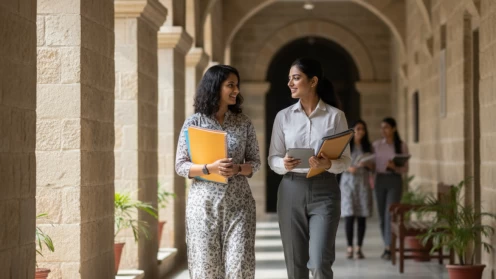
If you are passionate about learning a foreign language and wish to enhance your career prospects or immerse yourself in Korean culture, a Distance Certificate in Korean Language offers an accessible and flexible path. This programme, typically offered by reputed Indian universities, enables you to develop foundational skills in Korean communication, grammar, reading, and writing. The flexibility of distance learning allows you to balance your studies with personal and professional commitments, making it an attractive choice for working professionals, students, and language enthusiasts.
The course is designed to cater to beginners as well as those who may have some prior exposure to the language. The curriculum is structured to provide a gradual progression from basic to intermediate proficiency, utilising a mix of self-study materials, online lectures, and digital resources. Many universities supplement their content with interactive sessions, speaking exercises, and access to online communities, ensuring a holistic learning experience even in a distance format.
One of the key highlights of this programme is its recognition by Indian employers and educational institutions, especially when pursued from a UGC-DEB approved university. A certificate from a reputed institution adds significant value to your profile, opening doors to opportunities in translation, tourism, international business, and academia. Additionally, the affordability and convenience of distance learning make it a viable option for learners across India, regardless of their geographical location.
Universities such as the University of Mumbai and Jamia Millia Islamia have pioneered quality distance education in Korean language, providing robust study materials and dedicated academic support. As the demand for Korean language skills rises in India, especially due to the popularity of Korean culture and increasing business ties, this certificate serves as a stepping stone towards personal and professional growth.
Course Recognition and Approval Status
When pursuing a distance certificate in Korean language, it is crucial to ensure that your chosen university is recognised by the University Grants Commission (UGC) and its Distance Education Bureau (DEB). These regulatory bodies establish and maintain the quality and legitimacy of distance education programmes across India. UGC-DEB approval signifies that the certificate will be accepted by employers and educational institutions nationwide.
Additionally, some programmes may also receive approval from bodies like the All India Council for Technical Education (AICTE), further bolstering their credibility, especially in technical or vocational sectors. Recognition by these authorities ensures that the curriculum, faculty, and assessment methods meet national standards, offering you assurance regarding the value of your qualification.
It is important to note that certificates from UGC-DEB recognised universities are considered equivalent to those earned through conventional classroom study. This parity is particularly significant for government jobs, higher education admissions, and corporate recruitment. Employers in sectors such as translation, tourism, information technology, and international business increasingly recognise the practical utility of language skills acquired through distance education.
Before enrolling, always verify the current recognition status of the university and its specific programme by visiting official websites (ending with .edu.in or .ac.in) or consulting the UGC's updated list of approved distance education institutions. This due diligence will safeguard your investment of time and money, ensuring that your certificate holds enduring value.
Eligibility Criteria and Duration
The eligibility criteria for a distance certificate in Korean language are generally straightforward, making the programme accessible to a wide range of learners. Most universities require candidates to have completed 10+2 (higher secondary) from a recognised board. This baseline ensures that students possess the necessary academic foundation to engage with the course material effectively.
Some institutions may also accept graduates or those currently enrolled in an undergraduate or postgraduate programme. This flexibility is beneficial for students looking to enhance their academic portfolio or professionals aiming to add a valuable skill to their resume.
The duration of the course usually ranges from six months to one year, depending on the university and the depth of the curriculum. For example, the University of Mumbai offers a six-month certificate, while Jamia Millia Islamia's programme extends to a year. This time frame is ideal for intensive language acquisition without requiring a long-term commitment.
Since the course is offered in a distance learning format, you can pace your studies according to your convenience. However, it is advisable to adhere to the recommended timelines, as regular engagement with the language is key to building proficiency. Most universities provide access to course materials, online platforms, and academic support for the entire duration.
Who Should Consider This Course?
The distance certificate in Korean language is suitable for a diverse audience. If you are a student seeking to diversify your academic credentials or a working professional aiming to enhance your skill set, this programme can be a valuable addition to your profile. Language enthusiasts who are drawn to Korean culture, music, films, or literature will also find this course rewarding.
Professionals engaged in sectors such as tourism, hospitality, international business, translation, or education can benefit from Korean language skills, which are increasingly sought after in the globalised marketplace. The certificate also serves as an excellent starting point for those considering advanced studies or a career as a language trainer or interpreter.
Parents looking to encourage their children to learn a foreign language, entrepreneurs with business interests in Korea, or individuals planning to travel or work in Korean-speaking environments will also find this course highly relevant. The flexible nature of distance learning ensures that individuals with varied schedules and commitments can participate without disruption.
Ultimately, if you are motivated, self-disciplined, and eager to engage with a new linguistic and cultural landscape, this programme is tailor-made for you. The distance mode provides the freedom to learn at your own pace while still receiving structured guidance from experienced faculty.
Admission Process and Fee Details
The admission process for a distance certificate in Korean language is usually streamlined and student-friendly. Most universities open admissions once or twice a year, and the entire process can often be completed online through the university’s official portal. You will typically need to fill out an application form, upload scanned copies of relevant academic documents (such as your 10+2 marksheet), and pay the prescribed application fee.
Some universities may require a brief statement of purpose or an online interview, especially if the number of applicants exceeds the available seats. After document verification and fee payment, successful candidates receive access to study materials, online platforms, and academic calendars.
The fee structure varies between institutions, generally falling in the range of ₹15,000 to ₹50,000. For instance, the University of Mumbai charges around ₹20,000 for a six-month certificate, while Jamia Millia Islamia’s one-year programme is priced at approximately ₹35,000. These fees typically cover tuition, study materials, and access to online resources, although some universities may have separate charges for optional workshops or examination fees.
The payment process is secure and convenient, often allowing for online transactions via net banking, UPI, or credit/debit cards. Always verify the fee details and refund policy directly from the university’s official website to avoid misunderstandings or unexpected expenses.
Hidden Costs or Practical Requirements
One of the common concerns with distance education is the possibility of hidden costs. In most reputable universities, the published fee includes tuition, essential study materials, and access to digital learning platforms. However, you should be aware of certain optional or incidental expenses that may arise.
Practical sessions, workshops, or language immersion camps, if offered, are usually optional and may carry additional charges. These activities are designed to enhance speaking and listening skills but are not mandatory for the completion of the certificate. Participating in such sessions can be beneficial if you wish to gain more hands-on experience and interact with fellow learners.
Some universities may require you to purchase supplementary textbooks, dictionaries, or language apps, especially if you desire extra practice beyond the core curriculum. Additionally, examination fees, if not included in the initial payment, may be charged separately at the time of assessments.
Technical requirements are minimal but essential. You will need a stable internet connection, a smartphone or computer, and basic audio-visual equipment (such as headphones and a microphone) for accessing lectures, participating in virtual discussions, or submitting assignments. Clarify these requirements at the time of admission to ensure a smooth learning experience.
Syllabus and Core Subjects
The syllabus of a distance certificate in Korean language is designed to provide a comprehensive foundation in all key aspects of the language. Core modules generally include:
- Introduction to Hangul: Learning the Korean script, its origins, and correct pronunciation.
- Basic Grammar and Vocabulary: Understanding sentence structure, verb conjugations, and essential vocabulary for daily communication.
- Listening and Speaking Skills: Developing conversational proficiency through audio lessons, dialogues, and pronunciation practice.
- Reading Comprehension: Interpreting simple texts, stories, and dialogues in Korean.
- Writing Skills: Constructing sentences, short paragraphs, and basic correspondence in Korean.
- Korean Culture and Etiquette: Exploring cultural nuances, traditions, and social norms to facilitate effective communication.
- Basic Translation Techniques: Introduction to the principles and practices of translating from Korean to Indian languages and vice versa.
Assessment is usually based on assignments, online quizzes, and a final examination. Some universities may also include oral tests or viva voce to evaluate speaking skills. The curriculum is periodically updated to reflect contemporary usage and emerging trends in language learning.
Career Scope and Salary Potential
Proficiency in Korean opens up a diverse range of career opportunities in India. As globalisation accelerates, Indian companies and multinational corporations are increasingly seeking professionals with foreign language skills, especially in languages like Korean, which are in high demand and relatively less common.
Graduates of this certificate programme can pursue roles such as translators, interpreters, language trainers, customer support executives for Korean clients, tour coordinators, and cultural liaisons. The education sector also offers opportunities as Korean language instructors in schools, colleges, or private institutes. Media and entertainment, owing to the popularity of Korean pop culture, also value language experts for content localisation and subtitling.
Entry-level salaries for Korean language professionals in India can range from ₹3 lakh to ₹6 lakh per annum, depending on the sector, location, and your proficiency level. With experience and advanced skills, professionals can command higher packages, especially in sectors like IT, export-import, and international business, where effective communication with Korean partners is essential.
Additionally, the certificate serves as a stepping stone for further studies, such as advanced diplomas or degree programmes in Korean or related fields. The versatility of language skills ensures long-term career growth, adaptability, and the ability to tap into emerging opportunities both within India and in collaboration with Korean organisations.
Common Myths and Misunderstandings
Myth 1: Distance learning is not as valuable as traditional learning.
Fact: UGC-DEB approved distance education programmes are recognised as equivalent to regular classroom courses in India. Employers and educational institutions value the skills and knowledge acquired through accredited distance learning, especially when pursued from reputed universities.
Myth 2: Korean language skills aren’t marketable in India.
Fact: Korean language expertise is highly sought after, particularly in sectors like IT, export-import, tourism, media, and academia. India’s growing economic and cultural collaboration with South Korea has created a robust demand for professionals proficient in Korean.
Myth 3: You need to visit Korea to learn the language effectively.
Fact: While immersion can be beneficial, comprehensive study materials, interactive online resources, and virtual speaking partners allow you to achieve fluency from India. Many learners successfully acquire high proficiency through disciplined study and engagement with digital tools.
Understanding these facts will help you make informed decisions and fully leverage the benefits of distance education in Korean language.
Top Institutes Offering This Course
Several esteemed Indian universities offer UGC-DEB approved distance certificate programmes in Korean language, ensuring high-quality education and national recognition. Among the most prominent are:
| University | Location | Duration | Approximate Fees | Official Website |
|---|---|---|---|---|
| University of Mumbai | Mumbai | 6 months | ₹20,000 | mum.edu.in |
| Jamia Millia Islamia | Delhi | 1 year | ₹35,000 | jmi.ac.in |
These universities offer structured curricula, access to expert faculty, and reliable support systems for distance learners. It is advisable to consult the official university websites for the latest admission notifications, eligibility details, and updates on course offerings. Always ensure that the programme you select is listed under the university’s UGC-DEB approved courses for seamless recognition.
In conclusion, a Distance Certificate in Korean Language from a reputed Indian university is a valuable investment in your academic and professional future. With growing demand for language specialists in India, this programme equips you with skills that are both versatile and highly marketable. Take the next step with confidence and embark on your journey to mastering Korean from the comfort of your home.