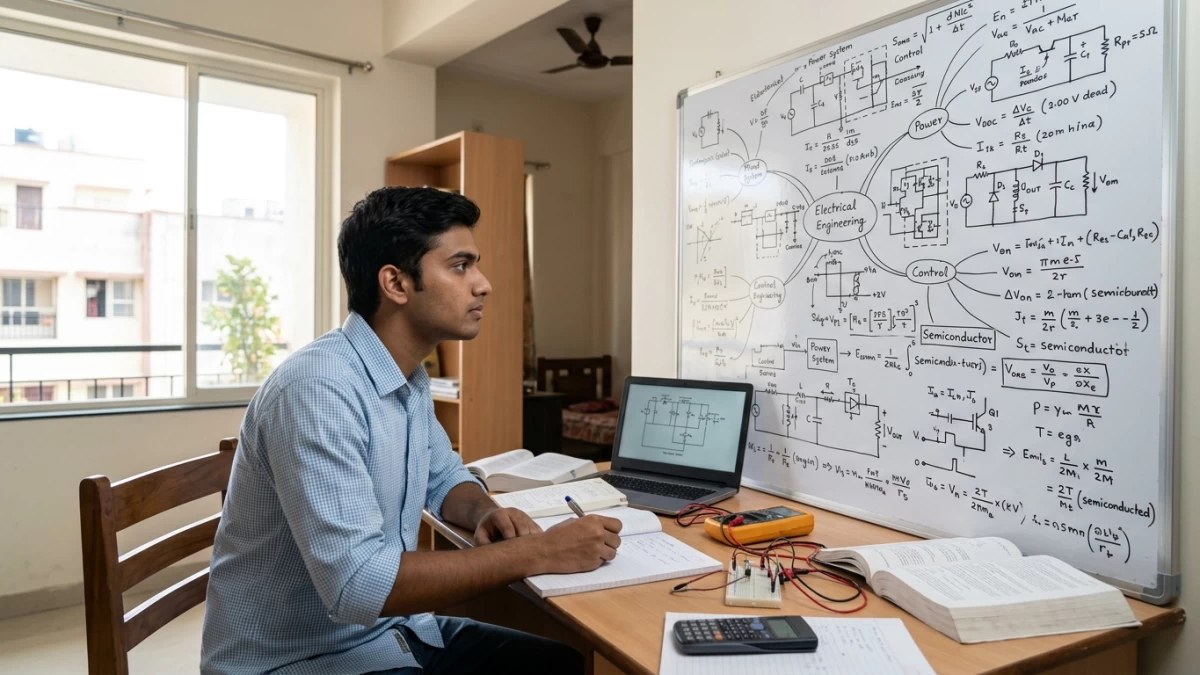
If you are considering a career in the vibrant field of electrical engineering but require the flexibility to study from home or while working, a Distance Diploma in Electrical Engineering could be your ideal choice. This programme is designed to provide foundational knowledge and practical skills in electrical systems, circuits, machines, and power generation, all delivered through a blend of online and periodic offline learning sessions.
Distance diploma programmes in electrical engineering are especially tailored for those who cannot enrol in regular, full-time courses due to personal, professional, or geographic constraints. The curriculum is aligned with industry standards and is periodically updated to reflect technological advancements, ensuring that you receive education relevant to the current job market.
One of the biggest advantages of pursuing a distance diploma is the flexibility it offers. You can learn at your own pace, access study materials online, and interact with faculty through digital platforms. Many institutions also offer support through regional centres, helping you stay on track with assignments and exams.
Importantly, this path opens doors to technical roles in industries such as power generation, manufacturing, construction, and more. With proper UGC-DEB approval, your degree is widely recognised, allowing you to compete confidently in the Indian job market.
Course Recognition and Approval Status
Before enrolling in any distance education programme, it is crucial to ensure its recognition by the University Grants Commission (UGC) and the Distance Education Bureau (DEB). These regulatory bodies set stringent quality benchmarks to maintain the academic integrity of distance learning in India.
Diplomas awarded by universities approved by UGC-DEB, such as Indira Gandhi National Open University (IGNOU), Maharashtra State Board of Technical Education (MSBTE), and Netaji Subhas Open University (NSOU), are recognised by the Ministry of Education, Government of India. This recognition assures you that your qualification holds value for both further education and employment in public and private sectors across the country.
UGC-DEB approval also means that the course curriculum, examination process, and practical components have undergone rigorous evaluation. As a result, employers and higher education institutions trust the credibility of your diploma, enabling you to pursue advanced studies or career opportunities without hesitation.
Always verify the approval status directly on the official university and UGC-DEB websites before enrolling, as this protects your investment of time, effort, and money.
Eligibility Criteria and Duration
The eligibility criteria for a distance diploma in electrical engineering are straightforward, ensuring access for a broad range of students across India. Typically, applicants must have completed their 10th or 12th standard, with a preference for those who have studied science subjects, particularly Mathematics and Physics.
Some universities also accept candidates who have completed an Industrial Training Institute (ITI) course in a related field. This makes the programme accessible for working professionals and those looking to upskill after basic technical training.
The usual duration for this diploma ranges from 1 to 3 years. The exact length depends on the university, structure of the programme, and your academic background. For instance, students with an ITI qualification may receive lateral entry into the second year, reducing the time required for completion.
This flexible duration allows you to balance your learning with personal and professional commitments, making it an excellent option for those who need to study part-time.
Who Should Consider This Course?
A distance diploma in electrical engineering is suitable for a wide variety of learners. If you are a recent school leaver looking to enter the technical workforce quickly, this course provides you with the skills and certification needed for entry-level jobs in various industries.
Working professionals or technicians seeking formal recognition of their skills will also benefit. If you are currently employed in a related field and wish to enhance your qualifications without leaving your job, this flexible mode of study allows you to upskill while earning.
Individuals from rural or remote areas, where access to regular colleges may be limited, can take full advantage of distance learning. The ability to study from home or at a nearby regional centre ensures that geographical barriers do not hinder your educational journey.
Finally, those planning to pursue further studies in engineering or related disciplines can use this diploma as a stepping stone, as it is recognised for lateral entry into advanced diploma or degree programmes in many Indian universities.
Admission Process and Fee Details
Admission to distance diploma programmes in electrical engineering is typically conducted online through the respective university's official portal. The process generally involves registering on the university website, filling out the application form, uploading required documents (such as marksheets and identity proof), and paying the application fee.
Once your application is reviewed and accepted, you may need to pay the programme fee either in full or as instalments, depending on the university's policy. Fee structures are designed to be affordable, making distance education accessible to a larger population.
As an example, IGNOU charges approximately ₹12,000 to ₹20,000 for the full diploma, while MSBTE's fees range from ₹7,000 to ₹15,000. Always check the latest fee structure on the university's official website to avoid surprises.
| University | Approximate Total Fees (₹) | Payment Mode |
|---|---|---|
| IGNOU | 12,000 – 20,000 | Annual/Installment |
| MSBTE | 7,000 – 15,000 | Annual/Installment |
| NSOU | Check official website | Annual/Installment |
Applicants are advised to keep digital and physical copies of all submitted documents and fee receipts for future reference.
Hidden Costs or Practical Requirements
While distance diploma programmes are designed to be cost-effective, it is important to be aware of any additional or hidden costs that may arise during your studies. These can include fees for practical lab sessions, examination charges, study materials, or travel expenses to attend mandatory on-campus practicals.
Most universities require students to attend compulsory practical labs at designated centres. These sessions are crucial for developing hands-on skills and are usually scheduled in advance to minimise disruptions to your work or personal life. For example, IGNOU conducts practical exams at specific centres, and attendance is mandatory for course completion.
Some institutions have started incorporating virtual labs to reduce the need for physical presence. However, certain essential experiments and assessments may still necessitate your presence at a university centre.
Be sure to review the university's official guidelines regarding practical requirements and associated costs. This helps in planning your budget and managing your study schedule effectively.
Syllabus and Core Subjects
The syllabus for a distance diploma in electrical engineering is structured to provide both theoretical understanding and practical expertise. Core subjects typically include:
- Basic Electrical Engineering
- Electrical Machines
- Electrical Measurement and Instrumentation
- Power Systems
- Control Systems
- Electrical Circuit Theory
- Electronics
- Industrial Automation
- Utilization of Electrical Energy
- Renewable Energy Sources
- Engineering Drawing
- Practical and Laboratory Work
- Project Work
Each module is designed to build your knowledge progressively, starting from fundamental concepts and moving towards advanced applications. Practical sessions and project work are integral, ensuring you gain real-world problem-solving abilities.
Career Scope and Salary Potential
After completing a distance diploma in electrical engineering, a wide range of career opportunities become available to you. You can seek employment as an electrical technician, junior engineer, maintenance supervisor, or in roles related to power distribution, manufacturing, and automation.
Public sector undertakings (PSUs), private industries, and government departments all value diploma holders, especially those from UGC-DEB accredited institutions. Your qualification is recognised for various recruitment exams and can be a stepping stone for promotions or lateral movements within your current organisation.
Initial salaries for diploma holders typically range from ₹15,000 to ₹30,000 per month, depending on your skills, experience, and the employer. With experience and further upskilling, you can progress to supervisory or managerial roles, leading to higher earning potential.
Additionally, this diploma can serve as a base for further studies, such as an advanced diploma or a B.Tech degree through lateral entry, opening even more lucrative career paths in the future.
Common Myths and Misunderstandings
There are several misconceptions surrounding distance education in engineering, which can deter prospective students from pursuing this valuable option.
Myth 1: "Distance education in engineering is considered inferior to regular courses."
Fact: UGC-DEB accredited programmes are designed to meet the same academic standards as regular courses. Your diploma is recognised for jobs and further education across India.
Myth 2: "Distance courses do not provide adequate academic or technical support."
Fact: Leading universities offer comprehensive online and offline support, including dedicated faculty, discussion forums, and access to digital libraries and resources.
Myth 3: "All distance courses are too easy and lack rigour."
Fact: Distance diploma programmes maintain strict academic standards, requiring regular assignments, practical exams, and periodic assessments, ensuring you gain genuine expertise.
Understanding these facts can help you make an informed decision about your educational journey and take full advantage of the opportunities offered by distance learning.
Top Institutes Offering This Course
Several reputed UGC-DEB approved universities in India offer distance diplomas in electrical engineering. Choosing a well-established institution ensures quality education, robust support, and recognised certification. Here are some leading options:
- Indira Gandhi National Open University (IGNOU): Known for its extensive distance education infrastructure and student support services. IGNOU's electrical engineering diploma is highly regarded and offers a mix of online learning and mandatory practical sessions at designated centres. Visit IGNOU
- Maharashtra State Board of Technical Education (MSBTE): MSBTE offers a distance diploma with practical training components, making it a popular choice among students in Maharashtra and neighbouring states. Visit MSBTE
- Netaji Subhas Open University (NSOU): NSOU provides technical diplomas with an emphasis on both theoretical and practical learning, catering especially to students in West Bengal. Visit NSOU
While these are among the most reputable, always cross-check the latest course offerings, fee details, and approval status on the respective university websites before applying.
In conclusion, a Distance Diploma in Electrical Engineering is a valuable and recognised qualification that empowers you to build a successful technical career in India, while balancing other commitments. By opting for a UGC-DEB approved programme, you can be confident in the validity and utility of your diploma throughout your professional journey.