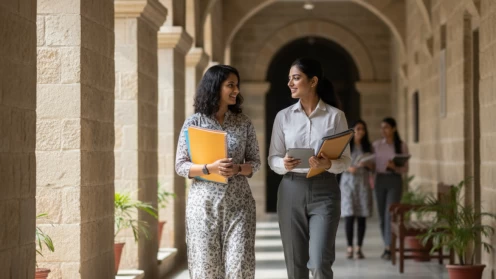
A Distance Diploma in Elementary Education (D.El.Ed.) is a specialised teacher training programme designed for those aspiring to teach children at the elementary or primary school level (classes I to VIII). The course is structured to equip you with both theoretical knowledge and practical skills necessary for effective classroom teaching in India’s diverse educational landscape. Offered in a flexible distance learning mode, this diploma makes it possible for working professionals, homemakers, and individuals from remote regions to pursue a recognised teaching qualification without having to attend regular classes.
One of the most appealing aspects of the Distance D.El.Ed. is its accessibility. With course materials delivered through online platforms, printed modules, and occasional contact classes, you can learn at your own pace while balancing other commitments. The curriculum is designed by experts in pedagogy and child psychology, ensuring that you receive a well-rounded education tailored to the needs of young learners.
The course prioritises foundational teaching methodologies, classroom management, educational psychology, and child development. In addition, it incorporates practical assignments and field experiences to bridge the gap between theory and real-world application. This blend of academic rigour and practical exposure prepares you to handle the daily challenges faced by elementary educators in classrooms across India.
Distance D.El.Ed. is widely offered by top Indian universities and is regulated by the University Grants Commission (UGC) and Distance Education Bureau (DEB), ensuring high standards of quality and recognition across the country.
Course Recognition and Approval Status
Recognition and validity are paramount when choosing any educational programme, especially in the field of teaching. The Distance Diploma in Elementary Education is recognised by the National Council for Teacher Education (NCTE), which is the statutory body responsible for regulating teacher education programmes in India. Additionally, for distance education, approval from the UGC-DEB is mandatory to ensure the course’s legitimacy and nationwide acceptability.
When you enrol in a Distance D.El.Ed. programme from a UGC-DEB and NCTE-approved university, you can rest assured that your qualification is valid for teaching positions in both government and private schools across India. This makes it a viable option for individuals aiming to enter the teaching profession without relocating or interrupting their current professional or personal obligations.
It is important to check the approval status of the university and specific programme before enrolling, as only those courses recognised by both UGC-DEB and NCTE are considered valid for employment in schools. Most reputable universities prominently display their accreditation details on their official websites, along with their respective approval letters and notifications.
Employers, especially government schools and educational boards, regularly verify the regulatory status of your diploma during recruitment. Thus, pursuing this diploma from an approved institution ensures your eligibility for various teaching opportunities and career advancement in the education sector.
Eligibility Criteria and Duration
The eligibility criteria for a Distance Diploma in Elementary Education are straightforward and inclusive, encouraging a broad spectrum of candidates to apply. The basic requirement is completion of 10+2 (Class XII) or an equivalent qualification from a recognised board. Some universities may also consider graduates, providing them with an opportunity to switch careers or enhance their qualifications.
The duration of the programme typically ranges from 1 to 2 years, depending on the university and the structure of the course. For example, leading universities like Delhi University and IGNOU offer a two-year version, which is the most common format. The flexible duration is particularly beneficial for working professionals, mothers returning to the workforce, and those residing in rural or remote areas.
Many universities allow you to complete the course within a maximum period, usually up to 4 years, in case you need to take breaks due to personal or professional reasons. This flexibility ensures you can manage your studies alongside other responsibilities without compromising on quality or recognition.
Before applying, it is advisable to carefully review the eligibility requirements and duration details on the university’s official website. If you are unsure, most universities have dedicated admission helplines to guide you through the process.
Who Should Consider This Course?
The Distance Diploma in Elementary Education is ideally suited for individuals who are passionate about shaping the future of young children and want to build a career in teaching at the foundational level. If you are already working as a teacher or teaching assistant but lack a formal teaching qualification, this programme provides a recognised credential that can enhance your professional standing and open up new opportunities.
It is also an excellent option for recent school graduates, homemakers looking to re-enter the workforce, and professionals considering a career change to teaching. The flexible distance learning format is especially helpful for those who cannot attend regular on-campus classes due to geographical, financial, or personal constraints.
For those residing in rural or semi-urban areas where access to traditional teacher training colleges may be limited, the Distance D.El.Ed. offers a practical solution to acquiring a qualification that is valid across India. It is also suitable for individuals who wish to prepare for government teaching exams, as the diploma meets the minimum eligibility requirements set by most educational boards and recruitment agencies.
If you have a genuine interest in child development, classroom management, and innovative teaching methods—and wish to make a positive impact in the education sector—this programme can serve as the perfect stepping stone for your career.
Admission Process and Fee Details
The admission process for the Distance Diploma in Elementary Education typically involves an online application through the university’s official portal. Here is a step-by-step overview of the general procedure:
- Visit the official website of your chosen university (e.g., IGNOU, Delhi University, Babasaheb Ambedkar Open University).
- Download or complete the online application form for the D.El.Ed. distance programme.
- Submit required documents such as academic certificates, identity proof, and photographs.
- Pay the application fee through the designated payment gateway.
- Await confirmation of admission, which is usually communicated via email or through the student portal.
Some universities may conduct a screening process or entrance test, but in most cases, admission is granted based on merit or first-come-first-served basis, provided you meet the eligibility criteria.
Fee structures vary across universities and states. As a general guideline, the total course fee ranges from ₹10,000 to ₹50,000 for the entire duration. For instance, Delhi University charges approximately ₹28,000 for two years, while IGNOU’s fee is around ₹16,000 for the same period. It is important to note that fee payment schedules (semester-wise or annual) may differ, so refer to the respective university’s prospectus for detailed information.
Many universities also offer instalment options, scholarships, or fee concessions for reserved categories, making the programme accessible to a wider audience. Always verify the latest fee structure and policies directly on the university’s website or admission brochure.
Hidden Costs or Practical Requirements
Unlike traditional teacher training programmes, the Distance D.El.Ed. generally does not require you to attend laboratory-based practical sessions. However, practical components are integrated through fieldwork, assignments, projects, and sometimes mandatory internships in local schools. These practical requirements are crucial for developing hands-on teaching skills and understanding classroom dynamics.
Most universities require you to complete a certain number of internship hours or teaching practice in a recognised school. While these are not laboratory-based, they might involve some local travel or coordination with nearby institutions. Sometimes, you may need to bear nominal costs for transportation, teaching aids, or materials required for your practical assignments.
It is wise to budget for additional expenses such as books, stationery, internet access, and transportation for field visits. However, these costs are generally modest compared to the overall affordability of the distance learning mode.
Some universities also organise contact classes or workshops at regional centres. Attendance at these sessions, while often optional, is highly recommended as it provides valuable interaction with faculty, peers, and resource persons, enriching your learning experience.
Syllabus and Core Subjects
The syllabus for the Distance Diploma in Elementary Education covers a comprehensive range of subjects aimed at developing competent and compassionate teachers. While the exact modules may vary across universities, the core areas generally include:
- Childhood and the Development of Children
- Contemporary Indian Society and Education
- Learning and Teaching
- Language Education (Hindi/English/regional languages)
- Mathematics Education for the Primary School Child
- Environmental Studies
- Understanding the Self
- Pedagogy of Social Sciences
- Classroom Management and Assessment
- Art and Physical Education
- Internship and School-Based Activities
These modules blend theoretical knowledge with practical application. You will learn about the psychological and social aspects of child development, effective teaching strategies, subject-specific pedagogy, and the use of educational technology. The internship and school-based activities are essential for gaining real-world teaching experience.
Career Scope and Salary Potential
Completing a Distance Diploma in Elementary Education opens up diverse career avenues in the education sector. The most common pathway is to become a primary or elementary school teacher in government or private institutions. With the increasing emphasis on foundational literacy and numeracy, trained elementary educators are in high demand across the country.
Government schools, aided institutions, and private schools regularly recruit D.El.Ed. diploma holders through state-level Teacher Eligibility Tests (TET) and direct recruitment drives. In addition, you may find opportunities in educational NGOs, remedial coaching centres, and curriculum development roles.
The starting salary for elementary teachers in India can range from ₹15,000 to ₹40,000 per month, depending on the type of institution, location, and your prior experience. With further qualifications and experience, you can progress to roles such as head teacher, academic coordinator, or supervisor, which come with higher earning potential and administrative responsibilities.
The diploma also lays a strong foundation for pursuing advanced studies, such as a Bachelor of Education (B.Ed.), which can further expand your career prospects within and beyond school teaching.
Common Myths and Misunderstandings
Several misconceptions surround distance education, particularly in professional domains like teaching. Let us address some of the most common myths:
- Myth 1: “Distance education is not as credible as regular education.”
Fact: UGC-DEB approved distance diplomas carry the same recognition as regular degrees, provided they are from accredited universities. Employers and regulatory bodies accept these qualifications for teaching positions nationwide. - Myth 2: “You cannot become a teacher if you only hold a diploma.”
Fact: The Diploma in Elementary Education is a recognised teaching qualification for classes I to VIII, as per NCTE norms. It makes you eligible for teaching jobs in both government and private schools. - Myth 3: “Distance education lacks practical skills training.”
Fact: Distance D.El.Ed. programmes incorporate practical assignments, fieldwork, and internships, ensuring you acquire essential hands-on teaching skills.
By enrolling in a UGC-DEB and NCTE-approved course, you are investing in a qualification that is both respected and valuable in the Indian education sector.
Top Institutes Offering This Course
Several esteemed Indian universities offer the Distance Diploma in Elementary Education, ensuring wide accessibility and robust academic support. Some of the top institutions include:
- Indira Gandhi National Open University (IGNOU): Renowned for its comprehensive distance education infrastructure and student support, IGNOU offers a well-structured D.El.Ed. programme approved by UGC-DEB and NCTE. The course is affordable, with a fee of approximately ₹16,000 for two years. Visit IGNOU
- University of Delhi (Delhi University): Known for its academic excellence, Delhi University provides a Distance D.El.Ed. programme with strong faculty and resource support. The fee is around ₹28,000 for two years, and the university ensures a blend of quality content and practical exposure. Visit DU
- Babasaheb Ambedkar Open University (BAOU): This Gujarat-based state open university offers a UGC-DEB and NCTE-approved D.El.Ed. programme, focusing on regional inclusivity and accessibility. Visit BAOU
When selecting a university, always prioritise those with established distance education mechanisms, experienced faculty, and transparent approval status. Regularly check official university websites for updates on programme availability, admission deadlines, and regulatory changes.