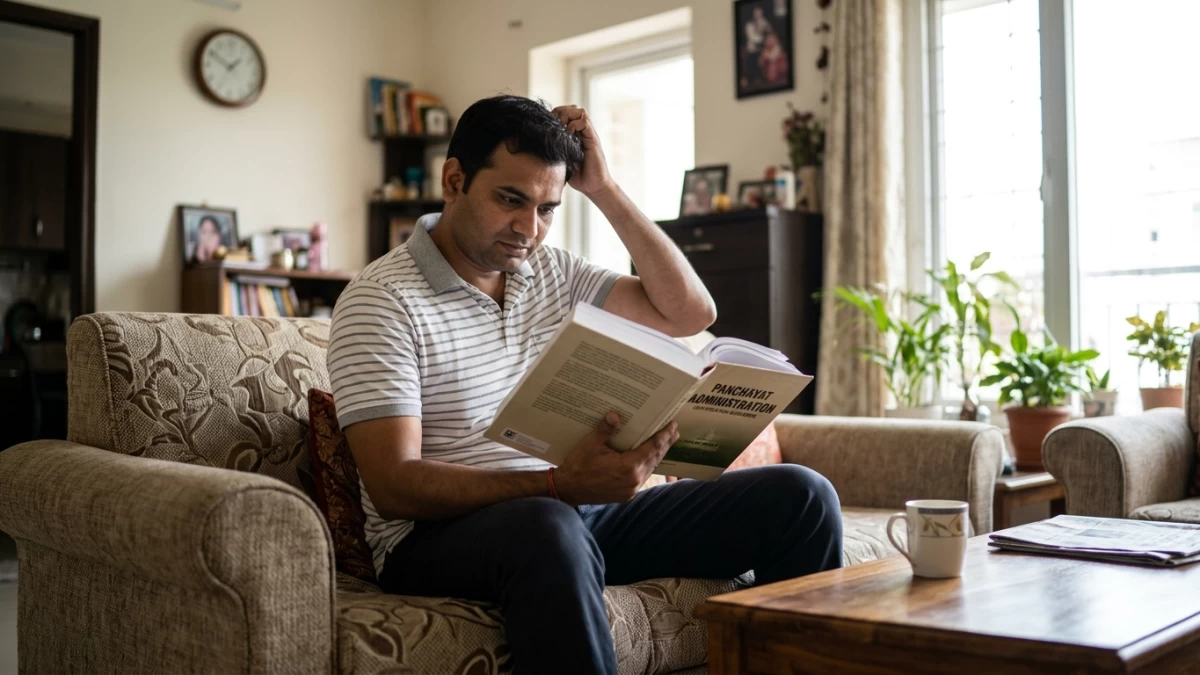
If you are passionate about empowering rural communities and wish to play a pivotal role in grassroots governance, a Distance Diploma in Panchayat Administration is an ideal stepping stone. This programme is designed to equip you with theoretical knowledge and practical understanding of how Panchayati Raj Institutions (PRIs) function, focusing on the effective administration and development of rural areas. The course is especially relevant as India continues to strengthen its decentralised governance model, making skilled panchayat administrators more vital than ever.
The curriculum blends essential subjects such as rural development, local governance, financial management at the panchayat level, social welfare schemes, and participative planning. The distance mode allows you to pursue your studies alongside existing commitments—be it a full-time job, family responsibilities, or other educational pursuits—without compromising on quality or recognition of the degree.
One of the key highlights of this diploma is its accessibility. With an affordable fee structure, flexible learning modules, and robust support systems, it caters to learners from various backgrounds, including working professionals, recent school leavers, and those already serving in rural administration roles. The programme’s duration is typically one year, making it a concise yet comprehensive preparatory course for careers in Panchayat administration.
Most importantly, this distance diploma is offered by reputed institutions such as Indira Gandhi National Open University (IGNOU), ensuring national recognition and validity for both employment and further studies.
Course Recognition and Approval Status
One of the primary concerns for any distance learning aspirant is the recognition and validity of the degree. Rest assured, the Diploma in Panchayat Level Administration and Development offered by IGNOU is fully recognised by the University Grants Commission (UGC) and the Distance Education Bureau (DEB). These regulatory bodies are responsible for setting and maintaining the standards of distance education in India.
UGC-DEB approval ensures that your diploma holds the same academic value as any regular mode qualification, making it acceptable for all government and private sector jobs, as well as for further studies. This recognition is crucial if you plan to appear for competitive examinations, apply for promotions, or seek lateral entry into undergraduate or postgraduate programmes.
The diploma’s credibility is further reinforced by the rigorous academic framework followed by IGNOU and similar institutions, which adhere strictly to UGC and DEB’s guidelines for curriculum design, assessment, and certification. This means your learning experience is not only flexible but also robust and quality-assured.
Moreover, UGC-DEB recognition is periodically reviewed, guaranteeing that the course content, delivery, and evaluation meet evolving educational and professional standards. Thus, you can confidently pursue this diploma knowing that it is well-accepted across sectors.
Eligibility Criteria and Duration
To enrol in the Diploma in Panchayat Level Administration and Development, you must have passed the 10+2 examination or an equivalent qualification from a recognised board or institution. This makes the programme accessible to a wide base of learners, including those who have recently completed school or hold equivalent qualifications through open schooling.
Some institutions may additionally look for relevant work experience in rural development, local governance, or associated fields. However, this is typically not a mandatory requirement for IGNOU’s diploma, though it can be beneficial in grasping core concepts more effectively.
Age criteria may apply in certain cases, generally allowing candidates between 18 to 45 years to enrol, ensuring a diverse yet focused learner cohort. It is also recommended that you have basic proficiency in the regional language, as many modules and assignments may require interaction with local communities or comprehension of vernacular materials.
The course duration is one year, structured to balance comprehensive coverage of topics with manageable workloads. This duration is ideal for those looking to quickly upskill and begin contributing to rural governance initiatives.
Who Should Consider This Course?
This diploma is particularly beneficial if you are:
- Aspiring to work in rural development or local self-government sectors.
- Already employed in a Panchayat or rural administration office and seeking formal certification for career advancement.
- A recent school leaver interested in public service, social work, or community development.
- A government employee looking to enhance your understanding of Panchayat governance and related administrative processes.
The programme is also suitable for social workers, NGO professionals, and those working in non-governmental organisations focused on rural empowerment. Additionally, individuals preparing for competitive exams related to state and central government services will find this diploma invaluable as it covers critical aspects of rural administration and development policies.
If you have an entrepreneurial mindset and wish to initiate development projects or social enterprises in rural areas, this course provides a strong foundation in the regulatory and administrative frameworks that govern such activities.
In summary, whether you are embarking on a new career, seeking professional validation, or aiming to deepen your impact in rural communities, this diploma is designed with your aspirations in mind.
Admission Process and Fee Details
Admission to IGNOU’s Diploma in Panchayat Level Administration and Development is straightforward and transparent. You can typically apply online through the official IGNOU admission portal. The process involves:
- Filling in the online application form with accurate personal, academic, and professional details.
- Uploading scanned copies of required documents, such as educational certificates, proof of age, and identity proof.
- Paying the prescribed fee through secure online payment methods.
The approximate programme fee is ₹4,000, making it one of the most affordable pathways to a career in Panchayat administration. This fee generally covers tuition, course materials, and examination charges. However, it is always advisable to check the latest fee structure on the university’s official website or contact their support centre for any updates.
Once your application is processed and accepted, you will receive study materials either in digital format or by post. The university also provides online academic support, contact classes (where available), and access to resource centres for assignments and examinations.
Some regional centres may offer additional assistance in vernacular languages, making the admission process and learning journey more inclusive and supportive for all students.
Hidden Costs or Practical Requirements
One of the appealing aspects of this distance diploma is its transparency and affordability. The primary cost is the programme fee, with no hidden charges for registration, practicals, or examinations in most cases. However, you may need to consider minor incidental expenses such as:
- Internet connectivity charges for accessing online resources, submitting assignments, and participating in virtual classes or discussions.
- Printing or photocopying study materials, if you prefer hard copies.
- Travel expenses for attending contact classes or examination centres, if applicable.
The course does not require a physical laboratory component. Instead, practical learning is integrated through assignments, case studies, and community-based projects. These practical elements are designed to be completed in your locality, making them both convenient and contextually relevant.
Overall, the course structure ensures that you can pursue your studies without the burden of unforeseen financial commitments or the need to relocate for practical training.
Syllabus and Core Subjects
The Diploma in Panchayat Level Administration and Development offers a well-rounded curriculum. Some of the fundamental subjects and modules include:
| Core Subject | Description |
|---|---|
| Introduction to Panchayati Raj System | Historical evolution, constitutional amendments, and structure of PRIs. |
| Rural Development and Social Welfare | Key government schemes, social justice measures, and poverty alleviation programmes. |
| Functions and Responsibilities of Panchayats | Administration, finance management, records keeping, and service delivery mechanisms. |
| Participatory Planning and Community Mobilisation | Techniques for involving the community in decision-making and development. |
| Legal Framework and Governance | Relevant laws, rules, and governance norms guiding Panchayati Raj Institutions. |
| Project Work/Assignments | Practical assignments focused on real-world Panchayat administration challenges. |
These modules are updated periodically to reflect changes in policies, laws, and best practices, ensuring you gain current and applicable knowledge.
Career Scope and Salary Potential
The Diploma in Panchayat Level Administration and Development opens doors to a variety of rewarding career paths in government, non-governmental organisations, and the social sector. Graduates commonly find employment as Panchayat Secretaries, Block Development Officers (with further qualifications), Social Welfare Officers, and Community Development Coordinators.
Many state governments and local bodies require formal training in Panchayat administration for recruitment or promotion to key roles in rural governance. The diploma is also valued by NGOs and international agencies working in rural development, where you may contribute as a project manager, field coordinator, or policy analyst.
Starting salaries for roles such as Panchayat Secretary or related positions typically range from ₹20,000 to ₹35,000 per month, with significant variation based on location, experience, and the employing organisation. With experience and further studies, you can progress to senior administrative or managerial roles, with commensurately higher pay scales and responsibilities.
Importantly, this qualification also lays a solid foundation for pursuing undergraduate and postgraduate studies in rural development, public administration, or social work, further enhancing your career prospects and earning potential.
Common Myths and Misunderstandings
There are several widespread misconceptions about distance diplomas in Panchayat administration, which can deter potential learners from pursuing these valuable qualifications. Let us address some common myths:
- Myth: Distance diplomas are not equivalent to regular diplomas.
Fact: UGC-DEB approved distance diplomas have the same recognition as regular mode diplomas for jobs and higher studies. - Myth: Distance diplomas are not accepted for government jobs.
Fact: Government bodies in India accept degrees and diplomas from UGC-DEB recognised institutions such as IGNOU. - Myth: Only state-run universities offer valid distance diplomas.
Fact: Both public and private universities with UGC-DEB approval are equally valid and recognised. - Myth: Distance learning is easier and less rigorous.
Fact: The academic framework, assessment methods, and quality standards for distance learning are set and monitored by UGC-DEB, ensuring parity with regular mode studies.
Understanding these facts helps you make informed decisions and pursue your academic goals with confidence.
Top Institutes Offering This Course
While IGNOU is the most prominent institution offering the Diploma in Panchayat Level Administration and Development through distance education, several state open universities in India have similar programmes under the umbrella of rural development and Panchayat administration. Some of the leading institutes include:
- Indira Gandhi National Open University (IGNOU): Renowned for its robust curriculum, national reach, and excellent support services for distance learners.
- Dr. B.R. Ambedkar Open University (BRAOU), Hyderabad: Offers various diplomas in rural and local governance, recognised by UGC-DEB.
- Nalanda Open University, Patna: Provides diploma and certificate courses in rural development and Panchayati Raj administration.
- Uttarakhand Open University: Features distance programmes focused on rural management and Panchayat level administration.
Each of these universities is UGC-DEB approved, ensuring the validity and recognition of your diploma across India. Always verify the latest course offerings, eligibility, and approval status on the respective university websites for the most current information.
By choosing a reputable and recognised institution, you ensure that your investment in education yields lasting benefits for your career and the communities you serve.