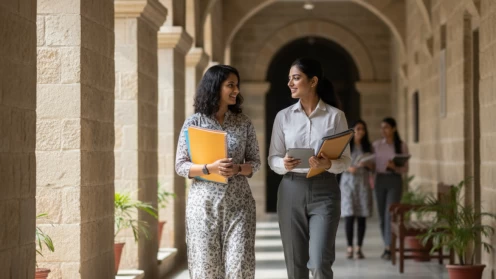
The field of law in India is not limited to advocates and judges. Paralegals play an essential role in supporting legal professionals, managing case files, conducting research, and assisting in the smooth functioning of law firms and legal departments. A Diploma in Paralegal Practice is designed to provide foundational legal knowledge and practical skills for those interested in supporting the legal process without becoming a full-fledged advocate.
In the Indian context, a diploma in paralegal practice typically covers core areas such as legal documentation, client interviewing, case management, and basic legal research. These skills are valuable for work in law firms, corporate legal cells, NGOs, and government offices. The aim of such a course is to make legal support services more accessible and professionalised across the country.
While the demand for paralegal professionals is growing due to increased legal awareness and expanding legal services, it is crucial to understand the limitations and recognition status of such programmes, especially when considering distance education modes.
Many prospective students are drawn to distance learning due to its flexibility and affordability. However, it is important to note that, as per current regulatory norms, no UGC-DEB approved Indian university offers a Distance Diploma in Paralegal Practice. Instead, students may find alternative legal studies or on-campus paralegal diploma programmes.
Course Recognition and Approval Status
In India, the University Grants Commission (UGC) is the apex body for regulating higher education, while the Distance Education Bureau (DEB) specifically oversees the approval and recognition of distance learning programmes. For any diploma or degree to be valid and recognised for employment and further studies, it must be offered by a UGC-DEB approved university or institution.
Currently, there are no UGC-DEB approved universities in India offering a Distance Diploma in Paralegal Practice. Any course advertised as such should be carefully scrutinised, as it may not carry the required recognition or may not be valid for employment or higher education purposes.
It is vital that you verify the accreditation status of any institution before enrolling. Pursuing a course from an unrecognised institution could lead to difficulties in job applications, government exams, or further studies. Always check the UGC-DEB official list of recognised programmes and institutions before taking any decision.
If your interest lies in paralegal studies, consider enrolling in on-campus diploma programmes offered by reputed institutions, or explore alternative legal courses that have UGC-DEB approval for distance learning.
Eligibility Criteria and Duration
The eligibility criteria for diploma programmes in paralegal practice generally require a minimum qualification of 10+2 from a recognised board. Some universities may consider candidates who have completed graduation, depending on the nature and depth of the course.
While these criteria are standard for on-campus programmes, as there are no UGC-DEB approved distance diplomas in paralegal practice, you will need to check with individual universities about their specific requirements for related legal diploma programmes.
Typically, a diploma in paralegal practice spans one year, divided into two semesters. This structure allows students to cover both theoretical and practical aspects of legal support work within a concise timeframe.
Prospective students should carefully review the eligibility and duration details on the official university websites or contact their admission offices directly. Do not rely solely on third-party sources, as information may be outdated or inaccurate.
Who Should Consider This Course?
If you are interested in the law but do not wish to become a lawyer or advocate, a diploma in paralegal practice can be a suitable choice. It is ideal for individuals who want to assist in legal work, work in law offices, NGOs, government departments, or corporate legal teams.
This programme is also beneficial for working professionals in administrative, HR, or related fields who seek to enhance their legal understanding for career advancement. Additionally, social workers and community organisers can use paralegal skills to support legal awareness and access to justice at the grassroots level.
Young graduates seeking to enter the legal support sector without committing to a lengthy LLB course can also benefit from this diploma. It provides essential skills in a shorter duration and can serve as a stepping stone for further legal education.
However, if you need the flexibility of distance education, explore closely related legal diploma programmes that are UGC-DEB approved, or consider on-campus options for paralegal studies.
Admission Process and Fee Details
The admission process for on-campus diploma programmes in paralegal practice or related legal diplomas typically involves submission of an application form, supporting documents (such as mark sheets and certificates), and sometimes a personal interview or written test.
Most universities open admissions once or twice a year. You should check the specific timelines and procedures on the official websites of the universities you are interested in. Some institutions may offer online application facilities, while others may require you to visit the campus in person.
The fee structure for diploma programmes in legal studies varies greatly depending on the university, its location, and the facilities provided. On average, the total course fee can range from ₹10,000 to ₹50,000 for the entire duration. This typically covers tuition fees, library access, and examination fees.
Always ensure you have a clear understanding of the fee structure, refund policies, and payment schedules before confirming your admission. If you are considering private institutions, be especially vigilant about hidden costs and ensure the programme is UGC-DEB approved if it claims distance mode delivery.
Hidden Costs or Practical Requirements
While the stated tuition fees cover most academic expenses, there can be additional costs that you should be aware of. These may include charges for study materials, moot court participation, workshops, or field visits, especially in on-campus programmes.
Some universities require students to attend seminars, guest lectures, or internships as part of the curriculum. These practical requirements may involve travel, accommodation, or logistical expenses that are not included in the course fee.
If you are considering a course that includes practical legal training, ensure you have clarity about the nature and cost of these components. It is advisable to budget for transportation, stationery, and possible project work.
For distance education in related fields, you may need to arrange for internet access, printing of study materials, or periodic campus visits for examinations. Always confirm these requirements directly with the university beforehand.
Syllabus and Core Subjects
- Introduction to Law and Legal Systems
- Legal Research and Writing
- Legal Documentation and Drafting
- Civil and Criminal Law Basics
- Client Interviewing and Counselling
- Case Management and Office Procedures
- Labour Laws and Social Legislation
- Professional Ethics for Paralegals
- Practical Training/Internship (in on-campus programmes)
The core modules are designed to equip you with a working knowledge of the Indian legal system, court structures, and day-to-day legal procedures. Legal research and documentation skills are emphasised, as these are essential for paralegal work. Practical training, where offered, helps you gain real-world experience in handling legal cases and client interactions.
Career Scope and Salary Potential
A diploma in paralegal practice opens doors to a range of career opportunities, particularly in law firms, advocate offices, corporate legal departments, NGOs, and government agencies. Paralegals are valued for their ability to manage documentation, assist in legal research, and support case preparation.
Entry-level paralegal professionals can expect to earn a starting salary ranging from ₹15,000 to ₹30,000 per month, depending on the employer and location. With experience and further qualifications, paralegals can move into supervisory roles or specialise in areas like intellectual property, real estate, or corporate law.
Many paralegals go on to pursue higher studies, such as LLB or specialised diplomas, leveraging their practical experience for academic advancement. NGOs and social service organisations also hire paralegals to facilitate legal awareness and aid in community-level legal issues.
The demand for skilled paralegals is likely to grow as legal literacy and access to justice initiatives expand across India, especially in rural and semi-urban areas.
Common Myths and Misunderstandings
One common myth is that anyone can call themselves a paralegal after doing a short online course. In reality, employers and clients increasingly look for formal qualifications from recognised institutions. Another misunderstanding is that distance diplomas in paralegal practice are valid in India; as discussed, such programmes are not UGC-DEB approved at present.
Some believe that paralegals can represent clients in court like advocates. However, paralegals are not authorised to practice law or appear before courts; their role is to assist lawyers and manage legal processes.
There is also a perception that paralegal work is limited to clerical tasks. In fact, skilled paralegals handle complex research, draft legal documents, and contribute significantly to case strategy under the supervision of advocates.
Lastly, many assume that a paralegal diploma is a substitute for an LLB. While it provides valuable legal knowledge, it does not confer the right to practice law. It is best seen as a foundation or support qualification rather than a professional law degree.
Top Institutes Offering This Course
As of now, no UGC-DEB approved Indian university offers a Distance Diploma in Paralegal Practice. However, several reputed universities and institutes offer on-campus diploma programmes or certificate courses in paralegal studies or legal assistance.
- Indira Gandhi National Open University (IGNOU): Offers various law-related diploma and certificate programmes, but not specifically in paralegal practice via distance mode.
- National Law Universities (NLUs): Some NLUs offer short-term certificate or diploma courses in legal studies or paralegal training, primarily in on-campus modes.
- State Universities: Many state universities and law colleges offer diploma courses in legal studies or paralegal training as part of their regular (on-campus) programmes.
- Private Law Institutes: There are private institutions that offer paralegal training, but you must verify their accreditation and recognition.
It is highly recommended to check the official university websites for the latest information on course availability, admission processes, and accreditation status. If you are interested in distance learning, consider related law diplomas that are UGC-DEB approved, or explore on-campus options for comprehensive paralegal training.