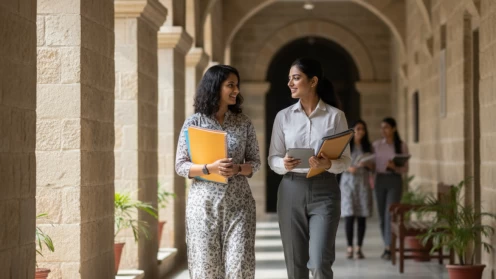
If you are considering pursuing a Master of Arts (MA) through distance mode in India, you are making a decision that can open doors to advanced academic learning, professional growth, and personal development. A Distance MA Higher Education programme is designed to offer flexibility, accessibility, and an enriching academic experience for learners who may not be able to attend regular classes due to professional, personal, or geographical constraints. These programmes are structured to provide the same academic rigour as their regular counterparts, ensuring that the quality of education is not compromised.
Distance MA courses are offered in a variety of specialisations such as English, History, Political Science, Sociology, Education, and more. You can choose a specialisation based on your interests or career goals. The curriculum is typically designed by experienced faculty and regularly updated to remain relevant to current academic and professional trends. The use of online learning platforms, printed study materials, and virtual seminars ensures that you have access to comprehensive learning resources at your convenience.
One of the most significant advantages of distance MA programmes is the flexibility they offer. You can study at your own pace, balance your studies with your job or family responsibilities, and still achieve a recognised postgraduate degree from an established Indian university. These programmes are ideal for working professionals, homemakers, and those living in remote areas who wish to enhance their qualifications without relocating or taking a career break.
Above all, Distance MA Higher Education is backed by a robust regulatory framework in India, ensuring that the degree you earn is valid, credible, and widely recognised across sectors.
Course Recognition and Approval Status
When you enrol in a Distance MA programme in India, it is essential to ensure that the course and the university are recognised by the University Grants Commission (UGC) and the Distance Education Bureau (DEB). UGC-DEB is the governing body that regulates distance education in India, setting standards and ensuring the credibility and quality of programmes offered in this mode.
Degrees awarded by UGC-DEB approved universities are valid for all purposes—be it employment in government and private sectors, further academic pursuits, or eligibility for competitive examinations. This recognition ensures that your investment of time, effort, and resources in obtaining a distance MA degree translates into real value and professional opportunities.
Renowned universities such as Indira Gandhi National Open University (IGNOU) and Tamil Nadu Open University (TNOU) are among the top institutions whose distance education programmes are recognised and respected across India. Always verify the approval status of any university before enrolling, which can be done by checking the official UGC-DEB list or the university’s own website.
It is a common misconception that distance education degrees are inferior to regular degrees. In reality, as long as the university and the programme are UGC-DEB approved, your distance MA degree is equivalent in the eyes of employers and academic institutions.
Eligibility Criteria and Duration
The eligibility criteria for enrolling in a Distance MA programme are straightforward. Generally, you must hold a Bachelor’s degree in any discipline from a recognised university. This inclusivity makes the programme accessible to a diverse range of students from various academic backgrounds.
Some universities may have specific requirements or ask for a minimum percentage in your undergraduate studies, but most, like IGNOU and TNOU, only require a pass in graduation. This open approach encourages more learners to pursue higher education without unnecessary hurdles.
The typical duration for a Distance MA degree is two years. This duration is standard across most Indian universities, aligning with the norms set by UGC. However, many universities also offer flexible timelines, allowing you to complete the programme within a maximum period (often up to five years), which is particularly helpful if you have other commitments or face unforeseen challenges during your studies.
Whether you are a fresh graduate, a working professional, or someone looking to restart your academic journey, the eligibility and duration policies of distance MA programmes are designed to support your educational aspirations.
Who Should Consider This Course?
A Distance MA Higher Education programme is suitable for a wide variety of learners. If you are a working professional aiming to enhance your qualifications for career advancement or a promotion, this flexible mode of study allows you to balance your job responsibilities with academic commitments without disrupting your career.
Homemakers, individuals residing in remote or rural areas, or those unable to attend regular classes due to personal or financial reasons will find distance MA programmes especially beneficial. The ability to study from the comfort of your home and at your own pace is a significant advantage.
Fresh graduates who wish to pursue higher studies but are unable to relocate or commit to full-time campus-based programmes can also benefit immensely. Distance MA programmes allow you to continue your education while gaining work experience or preparing for competitive exams.
Additionally, lifelong learners and those looking to gain expertise in a specific field for personal enrichment or community involvement will find these programmes rewarding. If you value flexibility, affordability, and recognised credentials, a Distance MA is an excellent choice.
Admission Process and Fee Details
The admission process for Distance MA programmes in India is generally straightforward and can often be completed online. Most universities release notifications for admissions on their official websites. The steps typically include filling out an application form, uploading scanned copies of your academic documents, and paying the application fee.
Once your application is reviewed and approved, you will receive confirmation of admission, along with details on study materials and the academic calendar. Some universities may require you to appear for a simple entrance assessment, but most admit students based on merit and eligibility criteria.
Regarding fees, Distance MA programmes are highly affordable when compared to regular courses. For instance, the total programme fee at IGNOU ranges from ₹12,000 to ₹30,000, while TNOU charges between ₹18,000 and ₹25,000 for the entire duration. Other UGC-DEB approved universities may have fees in the range of ₹15,000 to ₹35,000, depending on the specialisation and university policies.
This cost-effectiveness makes distance education accessible to a broader section of society, ensuring financial constraints do not become a barrier to higher learning. Always refer to the official university website for the most accurate and updated fee structure before applying.
Hidden Costs or Practical Requirements
One of the key advantages of Distance MA programmes is the minimal presence of hidden costs. The primary expenses include tuition fees, examination fees, and the cost of study materials, most of which are supplied by the university either in print or digital format.
For most disciplines, there are no mandatory practicals, laboratory work, or residential requirements. This is especially true for humanities and social science specialisations. However, if you opt for specialisations such as Psychology or Education, there may be some practical components or fieldwork, but these are usually well-defined and communicated in advance by the university.
It is advisable to plan for incidental costs that may arise, such as travel for examination centres or optional contact classes, and the purchase of supplementary reference books if desired. Otherwise, the transparent fee structure ensures you can plan your finances effectively without unexpected surprises.
Always read the prospectus or official guidelines for your chosen university and programme to confirm any additional requirements.
Syllabus and Core Subjects
The syllabus for a Distance MA programme is designed to provide in-depth knowledge and understanding of the chosen specialisation. While the exact subjects may vary by university and discipline, the following table provides a general overview of core modules commonly included:
| Specialisation | Core Subjects |
|---|---|
| English | British Literature, Indian Writing in English, Literary Criticism, American Literature, Postcolonial Studies, Optional Papers |
| History | Ancient Indian History, Medieval Indian History, Modern Indian History, Historical Methodology, Historiography, Electives |
| Political Science | Political Theory, Indian Government & Politics, Comparative Politics, International Relations, Public Administration, Electives |
| Sociology | Classical Sociological Theory, Research Methods, Indian Society, Social Change, Electives |
| Education | Philosophy of Education, Educational Psychology, Curriculum Studies, Educational Technology, Educational Research, Optional Practicals |
Each programme also includes assignments, projects, and sometimes a dissertation component, all of which are aimed at enhancing your analytical and research skills.
Career Scope and Salary Potential
A Distance MA degree from a UGC-DEB approved Indian university can significantly enhance your career prospects. Graduates can pursue teaching roles in schools, colleges, or coaching institutes, provided you clear the requisite eligibility tests such as NET or SET for higher education teaching positions.
The degree also opens up opportunities in research, publishing, journalism, civil services, social work, policy analysis, and administration. Many government and private organisations value the analytical, communication, and critical thinking skills that MA graduates possess.
Salary potential varies depending on your field, experience, and location. Entry-level positions in teaching or research typically start from ₹20,000 to ₹35,000 per month and can increase significantly with experience and additional qualifications. Roles in content writing, public relations, or administrative services also offer competitive remuneration.
Importantly, the flexibility of distance education allows you to gain work experience while studying, giving you a dual advantage in the job market.
Common Myths and Misunderstandings
There are several myths surrounding distance education, especially at the postgraduate level. Let us clarify the most common ones:
- Myth 1: Distance education degrees are not valued in the job market.
Fact: Degrees from UGC-DEB recognised universities are widely accepted and hold the same value as regular degrees for employment and further education. - Myth 2: Distance education lacks in quality.
Fact: UGC-DEB ensures that distance programmes adhere to strict academic standards. Many programmes are developed by experienced professors and subject experts. - Myth 3: Students lack access to study resources.
Fact: Most universities provide comprehensive study materials, access to e-libraries, and online learning platforms, ensuring students receive substantial academic support.
By choosing a recognised university, you can confidently dispel these myths and pursue your MA with assurance.
Top Institutes Offering This Course
India has a robust network of universities offering Distance MA Higher Education programmes. Some of the top UGC-DEB approved institutions include:
- Indira Gandhi National Open University (IGNOU) – Known for its extensive range of MA specialisations and excellent support services. www.ignou.ac.in
- Tamil Nadu Open University (TNOU) – Offers MA programmes with flexible study options and a strong focus on student support. www.tnou.ac.in
- Dr. B.R. Ambedkar Open University (BRAOU) – Renowned for accessible distance education in various disciplines.
- Karnataka State Open University (KSOU) – Offers a broad spectrum of humanities and social sciences programmes through distance mode.
- Netaji Subhas Open University (NSOU) – West Bengal’s premier distance education institution with recognised MA programmes.
Before applying, always verify the latest UGC-DEB approval status and course offerings on the respective university’s website. With the right choice, a Distance MA can be your stepping stone to a rewarding academic and professional journey.