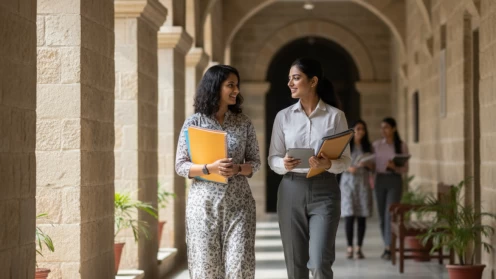
In an increasingly interconnected world, the study of peace and conflict has become more relevant than ever before. A Distance MA in Peace Studies equips you to understand the root causes of conflicts, explore methods for resolving them, and promote a more harmonious society. This postgraduate programme is designed for learners who wish to gain in-depth knowledge of peace processes, human rights, conflict transformation, and international relations, all through a flexible learning mode.
Distance education in Peace Studies allows you to pursue advanced studies without the need to relocate or leave your professional or personal commitments. This mode of learning is particularly beneficial for those residing in remote areas or for working professionals seeking to upgrade their qualifications. Indian universities recognised by the University Grants Commission (UGC) and Distance Education Bureau (DEB) offer well-structured MA Peace Studies programmes that combine academic rigour with practical skills.
The curriculum typically covers a broad range of topics, from theories of peace and conflict to hands-on project work, ensuring a holistic approach to peace education. With the flexibility to study at your own pace and a support system of study materials and occasional contact classes, distance learning opens new avenues for personal and professional growth in this meaningful field.
Whether you aspire to work with NGOs, government agencies, or international organisations, or wish to contribute to policy-making and research, a Distance MA in Peace Studies can lay a strong foundation for a rewarding career focused on positive societal change.
Who Should Choose Distance MA Peace Studies?
The Distance MA in Peace Studies is an ideal choice for individuals passionate about creating a more just and peaceful society. If you are committed to understanding the complexities of conflict and wish to contribute towards conflict resolution and peacebuilding, this course is for you. It suits those who are naturally empathetic, critical thinkers, and interested in global and domestic issues.
This programme is particularly suitable for working professionals who are already engaged in social work, education, law enforcement, international relations, or community development. The flexible nature of distance education allows you to balance your current job responsibilities while furthering your academic qualifications.
Graduates from any discipline looking to transition into careers in the social sector, human rights, policy analysis, or international diplomacy can benefit from the multidisciplinary approach of Peace Studies. Even if you are still exploring your career path but have a keen interest in societal issues, this course provides you with the theoretical knowledge and practical skills to make a difference.
Additionally, those living in areas far from major academic centres or who face constraints that prevent them from attending regular classes will find distance education a valuable alternative to traditional on-campus study.
Eligibility Criteria and Admission Requirements
Admission to a Distance MA in Peace Studies programme typically requires a bachelor’s degree from a recognised university. The discipline of your undergraduate degree is generally flexible, allowing graduates from arts, sciences, commerce, law, or any other field to apply.
Some universities may specify a minimum aggregate percentage in your undergraduate studies, so it is important to check the exact requirement of the university of your choice. Occasionally, preference may be given to candidates with a background in social sciences, political science, or humanities, but this is not universally enforced.
Alongside academic qualifications, you may be asked to submit supporting documents such as marksheets, proof of identity, and recent photographs. In rare cases, universities might conduct a personal interview or written test to assess your aptitude for the subject.
It is essential to ensure that the university where you plan to enrol is recognised by UGC and DEB, as this guarantees the validity and acceptance of your degree for further studies or employment.
Step-by-Step Admission Process
The admission process for a Distance MA in Peace Studies is designed to be straightforward and accessible. Here is a typical step-by-step guide to help you navigate the process:
- Research and Shortlisting: Start by identifying UGC-DEB recognised universities in India that offer the MA Peace Studies programme in distance mode. Compare eligibility, fees, and course structure.
- Application Submission: Obtain the application form from the university’s official website or authorised study centre. Fill out the form with accurate details and attach the required documents, such as academic certificates, photographs, and identity proof.
- Application Fee Payment: Pay the non-refundable application fee, which varies by university, through the prescribed mode (online or demand draft).
- Document Verification: The university may verify your academic records and other submitted documents. In some cases, you may be called for a brief interview or asked to submit a statement of purpose.
- Admission Confirmation: Upon successful verification, you will receive an admission confirmation letter or email. Some universities also provide enrolment numbers at this stage.
- Fee Payment and Course Registration: Pay the first instalment of programme fees as per the university’s guidelines and register for your first semester or year.
- Receipt of Study Materials: You will receive study materials via post or digital platforms. These resources will guide your self-study throughout the course.
Always keep copies of all submission receipts, application forms, and correspondence for future reference. For specific deadlines, consult the official university website, as admission cycles may vary.
Course Duration and Fee Structure
The Distance MA in Peace Studies typically extends over two years, divided into four semesters. Some universities allow a maximum duration of up to five years to complete the programme, providing flexibility for students managing other commitments.
Fee structures can vary significantly depending on the university. On average, you may expect to pay between ₹20,000 and ₹50,000 per year. Some universities, like IGNOU, offer the programme at a lower total fee, while others may have higher annual charges.
Here is a table summarising the fee structure of some popular Indian universities offering Distance MA Peace Studies:
| University | Total Fees (INR) | Duration |
|---|---|---|
| IGNOU | ₹14,400 | 2 years |
| TISS Hyderabad | Approx. ₹76,000 | 2 years |
| Allahabad University | ₹60,000 | 2 years |
| Annamalai University | ₹32,000 | 2 years |
| Madurai Kamaraj University | Approx. ₹40,000 | 2 years |
Always refer to the official university website for the latest fee structure and payment schedules, as fees are subject to periodic revision.
Hidden Costs and Practical Expenses
While calculating the total cost of your Distance MA Peace Studies, it is important to consider expenses beyond tuition fees. Hidden costs may include registration charges, examination fees, re-evaluation fees, and charges for obtaining study materials or additional reference books.
If your university organises contact classes or workshops, you may incur travel and accommodation expenses. Some programmes require submission of printed assignments, which can add stationery and courier costs to your budget.
Internet connectivity is crucial for accessing online study materials, submitting assignments, and participating in webinars or virtual discussions. Make sure your home setup can support these requirements, especially if your programme offers a blended mode with online components.
For the dissertation or project work, there might be costs associated with field visits, data collection, or the purchase of relevant software and research tools. Planning for these practical expenses in advance will help you manage your finances smoothly during your studies.
Is Distance MA Peace Studies Valid?
According to UGC and DEB norms, distance education in India is fully valid as long as the programme is offered by a university recognised by these regulatory bodies. Both distance and online modes are considered equivalent to regular degrees for employment and further education, provided they comply with UGC-DEB regulations.
The validity of your degree ensures eligibility for government jobs, entrance to higher studies like MPhil or PhD, and recognition by employers in the private and public sectors. However, it is the responsibility of the student to verify the accreditation status of the university and the specific programme before enrolling.
For professional or academic recognition, always retain your registration documents, mark sheets, and degree certificates. UGC-DEB regularly updates the list of approved universities and programmes on their official websites.
Degrees obtained from unrecognised institutions may not be accepted for employment or further studies, so diligent verification is crucial.
How to Verify University Approval
Ensuring that your chosen university is UGC-DEB approved is critical for the recognition of your degree. Here’s how you can verify the approval status:
- Visit the official UGC-DEB portal and check the list of recognised universities and programmes.
- Review the university’s official website for information on accreditations, NAAC grades, and UGC-DEB approval certificates.
- Contact the admissions office directly to request details about regulatory approvals and compliance with UGC-DEB norms.
- Cross-check information with the UGC’s consolidated list of recognised universities available on their website.
Be cautious of institutions making misleading claims or offering degrees at suspiciously low fees. Always insist on official documentation confirming recognition, and avoid enrolling in universities not listed by UGC-DEB.
Comprehensive Syllabus and Subjects
The Distance MA Peace Studies syllabus is designed to offer both theoretical foundations and practical insights. While the exact curriculum may vary by university, the following subjects are commonly included:
- Theories of Peace and Conflict
- Human Rights and Peace Studies
- Research Methodology
- International Relations
- Area Studies (focusing on specific conflicts or regions)
- Global Governance and International Organisations
- Non-Violent Movements
- Peace Education and Communication
- Gender, Peace, and Security
- Environmental and Developmental Issues
- Dissertation/Project Work (may be mandatory)
Through these modules, you will develop analytical skills, research competence, and a deep understanding of peacebuilding strategies relevant to both Indian and global contexts.
Learning Method and Examination Pattern
The learning methodology for Distance MA Peace Studies primarily involves self-study using printed or digital study materials provided by the university. Some institutions supplement this with periodic contact classes or online interactive sessions to clarify concepts and facilitate peer discussions.
Assignments form a significant part of the assessment process. You may be required to submit written assignments at the end of each unit or module, which are evaluated as part of your internal assessment.
Term-end examinations are usually conducted at designated centres. These may be open-book or closed-book depending on the university’s policy. In some cases, universities conduct online exams or viva voce for project evaluation.
The final semester often involves a dissertation or project work, where you apply research methodologies to a relevant topic. This practical component is essential for developing critical thinking and research skills.
Career Scope and Job Opportunities
A Distance MA in Peace Studies opens doors to a variety of meaningful careers. Graduates can pursue roles in non-governmental organisations (NGOs), government agencies, research institutions, and international bodies working in peacekeeping, conflict resolution, and development.
- Peace Educators in schools, colleges, or community centres
- Conflict Resolution Specialists for mediation and negotiation initiatives
- Research Analysts in think tanks or policy institutions
- Policy Advisors in government departments or international organisations
- Programme Officers in NGOs and foundations focused on social justice, human rights, or development
- Consultants in peacebuilding projects or corporate social responsibility initiatives
Your expertise will be valued in sectors ranging from education and law enforcement to foreign affairs and media. The skills you acquire, such as critical analysis, negotiation, research, and communication, are highly transferable and can lead to leadership roles over time.
Salary Expectations and Career Progression
Salary packages after a Distance MA in Peace Studies vary based on the sector, job profile, location, and your prior experience. Entry-level positions in NGOs or research organisations may offer a starting salary in the range of ₹20,000 to ₹35,000 per month.
With experience, you can progress to mid-level or senior roles such as project manager, policy advisor, or academic researcher, where salaries can range from ₹40,000 to ₹80,000 per month or higher, especially with international exposure or specialised skills.
Government appointments, such as those in public policy or development agencies, follow the pay scales prescribed by the respective departments. In academia, progressing to roles like lecturer or assistant professor can yield competitive salaries and opportunities for further research.
Continuous professional development, networking, and further studies (like MPhil or PhD) can significantly enhance your earning potential and career prospects in this field.
Distance vs Regular MA Peace Studies Comparison
When choosing between distance and regular MA Peace Studies, it is important to consider your personal circumstances and learning preferences. Regular programmes require full-time attendance on campus, offering daily classroom interaction, seminars, and co-curricular activities. This mode is ideal for those who can commit to a structured routine and benefit from face-to-face engagement.
Distance MA, by contrast, provides flexibility to study from anywhere at your own pace. This is beneficial for working professionals, those with family responsibilities, or individuals living far from universities. However, it requires a high degree of self-discipline and motivation.
Both modes are equally valid if the university is UGC-DEB approved. The curriculum and degree awarded are generally on par, but the learning experience and assessment methods may differ.
Choose distance learning if you need flexibility and independence; opt for regular mode if you prefer a campus environment and frequent interaction with peers and faculty.
Distance vs Online MA Peace Studies Comparison
Distance and online education both offer flexible alternatives to regular campus-based study, but there are subtle differences:
- Distance Mode: Study materials are provided in print or digital format; occasional contact classes may be organised; assessments include assignments and exams at physical centres.
- Online Mode: All coursework is delivered via digital platforms; greater emphasis on real-time webinars, online discussions, and interactive assessments; exams may be conducted remotely.
Online mode often provides more opportunities for immediate feedback and interaction, while distance mode is ideal for those who prefer self-paced study with minimal reliance on internet connectivity.
Both modes are recognised by UGC-DEB, provided the university and programme have the necessary approvals. Your choice should depend on your preferred learning style, access to technology, and need for flexibility.
Top Distance Universities for MA Peace Studies
Several reputed Indian universities offer Distance MA Peace Studies. Here are some of the top options:
- IGNOU (Indira Gandhi National Open University): Known for its extensive network and affordable fees, IGNOU offers a comprehensive MA Peace Studies programme with nationwide support centres.
- TISS Hyderabad: A premier institution in social sciences, TISS provides a robust Peace Studies curriculum with a blend of theoretical and practical components.
- Allahabad University: Offers a well-structured Peace Studies programme with focus on contemporary conflict issues and research methodologies.
- Annamalai University: Recognised for its long-standing distance education wing, Annamalai University delivers a value-driven MA in Peace Studies.
- Madurai Kamaraj University: Provides an accessible and affordable Peace Studies programme for students across India.
Always cross-check the current UGC-DEB approval and specific course offerings on the official university websites before applying.
Common Mistakes to Avoid While Choosing a University
Choosing the right university for your Distance MA Peace Studies is crucial. Here are some common mistakes to avoid:
- Not verifying UGC-DEB recognition before enrolling. This can render your degree invalid for jobs or further studies.
- Overlooking hidden costs such as examination fees, contact class expenses, and material charges.
- Failing to check the syllabus and course delivery method, which can affect your learning experience and career goals.
- Ignoring the university’s reputation, student support services, and faculty credentials.
- Enrolling based on low fees alone, without considering academic quality or regulatory approvals.
- Missing application or fee payment deadlines due to lack of planning.
Careful research and cross-verification will help you make an informed decision, ensuring your hard work leads to recognised qualifications and rewarding opportunities.
Conclusion: Is this Course Right for You?
A Distance MA in Peace Studies is an excellent choice if you aspire to understand and address the challenges of conflict and peace in society. With its flexible learning model, the programme caters to diverse learners, including working professionals, fresh graduates, and those seeking a career shift into the social sector.
By choosing a UGC-DEB approved university and planning your studies carefully, you can gain valuable knowledge, practical skills, and recognised credentials. The course opens up career possibilities in NGOs, government, education, policy-making, and beyond.
While distance learning requires self-motivation and discipline, the rewards are significant: personal growth, professional advancement, and the opportunity to contribute meaningfully to peace and development initiatives.
Consider your career goals, learning preferences, and logistical needs before enrolling. With the right preparation, a Distance MA in Peace Studies can be a transformative step towards building a more peaceful world—and a satisfying career for yourself.