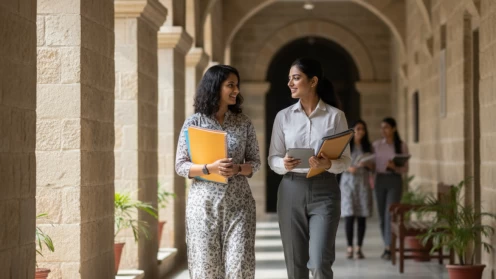
Pursuing a Master of Arts (MA) in Urdu through distance education has become a popular choice for Indian students who seek flexibility and quality education. Distance MA Urdu allows you to continue your higher studies alongside work or personal commitments. The programme is designed to provide a deep understanding of Urdu literature, linguistics, translation, and related cultural studies, all without the necessity of attending regular campus-based classes.
Distance education in India is regulated by the University Grants Commission (UGC) and the Distance Education Bureau (DEB), ensuring that the quality and validity of the degree are maintained. Programmes are structured to include self-learning materials, periodic assignments, and examinations, making higher education accessible to a broader section of society.
Urdu, being one of the prominent languages of India, holds cultural, historical, and literary significance. A distance MA in Urdu not only enriches your knowledge but also opens up diverse career opportunities in education, translation, media, and government sectors. Whether you are a working professional, a homemaker, or someone residing in a remote area, distance MA Urdu is tailored to meet your academic ambitions without geographical constraints.
This guide aims to provide you with comprehensive information about eligibility, admission procedures, course structure, fees, university approvals, and future prospects, ensuring you make an informed decision about your academic journey.
Who Should Choose Distance MA Urdu?
Distance MA Urdu is ideal for individuals who are passionate about Urdu language, literature, and culture but are unable to pursue a regular, on-campus programme due to personal or professional commitments. If you are a working professional seeking to upskill or transition into academia, translation, or media, this course offers the flexibility to balance work and study.
This programme is also suitable for those residing in rural or remote areas where access to universities is limited. Homemakers, individuals with mobility constraints, or those with family responsibilities can benefit from the self-paced learning and flexible examination schedules that distance education offers.
If you have completed your undergraduate degree and wish to deepen your understanding of Urdu literature and linguistics without the pressure of daily classes, a distance MA in Urdu can be the right fit. It also serves as a stepping stone for those aiming to pursue research or teaching positions in the future.
Furthermore, if you are preparing for competitive examinations where a postgraduate degree is required, or if you wish to enhance your qualifications to improve job prospects in government or private sectors, this programme is both convenient and recognised.
Eligibility Criteria and Admission Requirements
To enrol in a distance MA Urdu programme, you must hold a Bachelor’s degree in any discipline from a recognised university. The degree must be awarded by an institution that is approved by the UGC or an equivalent regulatory body. While most universities accept graduates from any stream, some may specify a minimum percentage—typically around 50% or an equivalent CGPA.
Certain universities may give preference to candidates with an undergraduate background in Urdu or related fields, but this is not a universal requirement. It is advisable to check the specific eligibility norms of the university to which you are applying.
Some institutions may require you to submit proof of proficiency in Urdu, especially if your previous education was in a different medium. However, in most cases, the admissions are based on merit, and entrance examinations are generally not mandatory.
You should ensure all documents—such as mark sheets, degree certificates, and identity proofs—are ready and meet the university’s documentation standards before applying to the programme.
Step-by-Step Admission Process
The admission process for distance MA Urdu is straightforward and usually conducted online or through designated study centres. Here is a step-by-step outline to guide you:
- Research and Shortlist: Identify UGC-DEB approved universities offering distance MA Urdu. Check their official websites for detailed admission guidelines.
- Application Form: Fill out the online or offline application form provided by the university. Ensure that you provide accurate information and upload scanned copies of all required documents.
- Document Submission: Upload or submit attested copies of your academic qualifications, proof of identity, and, if required, Urdu proficiency certificates.
- Fee Payment: Pay the application fee or programme fee as specified. Payment options may include online transfer, demand draft, or through bank challan.
- Merit List or Confirmation: Most universities release a merit list or send an admission confirmation based on your academic profile. If selected, you may receive an official admission letter.
- Enrolment: Upon confirmation, complete the enrolment process and collect your study materials or access credentials for online resources.
Admission cycles typically begin in June-July and may have a second window around December-January, depending on the university’s academic calendar.
Course Duration and Fee Structure
The duration of a distance MA Urdu programme is generally two years, divided into four semesters. Some universities allow a maximum period of four years to complete the degree, accommodating those who require more time due to personal or professional reasons.
Fees for the programme vary considerably across institutions. On average, you can expect annual fees to range from ₹10,000 to ₹50,000. The total fee depends on the university, course structure, support services, and study materials provided. Some universities offer semester-wise payment options, while others may require an annual lump sum.
Below is a table summarising the approximate fee structure of leading universities:
| University | Approximate Total Fees (₹) | Payment Mode |
|---|---|---|
| IGNOU | 10,800 | Annual/Semester |
| Jamia Millia Islamia | 34,000 | Annual |
| Aligarh Muslim University | 25,000 | Annual/Semester |
Always refer to the official university website for the most accurate and updated fee details.
Hidden Costs and Practical Expenses
While the tuition fee constitutes the primary expense, there are a few additional costs associated with pursuing a distance MA Urdu. These may include:
- Study Materials: Some universities provide free study materials, while others may charge separately for printed books or supplementary resources.
- Examination Fees: Examination and re-evaluation fees are often charged separately and may apply per semester or per paper.
- Travel and Accommodation: If face-to-face contact classes or examinations are held at designated centres, you may incur transportation or lodging costs.
- Internet and Technology: Accessing online resources, submitting assignments, or attending virtual classes may require a stable internet connection and a computer or smartphone.
- Miscellaneous: Costs for attestation, document submission, courier charges, or buying reference books should also be considered.
Being aware of these hidden and practical expenses helps you budget effectively and avoid last-minute surprises during your academic journey.
Is Distance MA Urdu Valid?
The validity of a distance MA Urdu degree hinges on the university’s recognition by the UGC and approval from the DEB. As per Indian regulations, degrees awarded by UGC-DEB approved institutions are on par with regular degrees for employment, competitive exams, and further studies.
Such recognition ensures that your qualification is accepted for teaching positions, government jobs, research roles, and other career avenues. It also provides eligibility for applying to PhD or MPhil programmes and other higher studies, provided you meet additional criteria set by the respective institution.
However, it is crucial to ensure that the programme is not only recognised at the time of your enrolment but continues to maintain its approval status throughout the duration of your study.
Always verify the university’s and programme’s approval status to safeguard your academic and professional future.
How to Verify University Approval
Verifying the approval of your chosen university and programme is essential. Here’s how you can do it:
- Visit the UGC and DEB official websites. Look for the list of approved universities and programmes.
- Check the university’s official website for their UGC-DEB recognition certificates and validity period.
- Contact the university’s admission office directly to confirm approval status.
- Refer to public notices, circulars, or press releases on the UGC/DEB portals regarding programme recognition.
Keeping a record of the approval status at the time of your admission is advisable, as it may be required for future reference, especially when applying for jobs or further education.
Comprehensive Syllabus and Subjects
The distance MA Urdu syllabus is designed to provide a thorough grounding in Urdu language, literature, and associated fields. While specific subjects may vary by university, common modules include:
- Classical and Modern Urdu Literature
- History of Urdu Language and Literature
- Urdu Poetry and Prose
- Linguistics and Language Studies
- Translation Theory and Practice
- Cultural and Literary Criticism
- Research Methodology in Urdu
- Elective Papers (such as Drama, Fiction, or Comparative Literature)
- Project Work or Dissertation
The programme typically covers 60 to 120 credits, structured across four semesters, ensuring a balanced mix of core and elective modules.
Learning Method and Examination Pattern
Distance MA Urdu programmes combine self-paced study with periodic assignments and examinations. You receive printed or digital study materials, allowing you to study at your convenience. Many universities also offer online resources, e-books, and recorded lectures to aid your learning.
Assignments play a crucial role and may require submission online or at designated centres. They are designed to assess your understanding of the subject and contribute to your final grades.
Examinations are typically held at the end of each semester. The mode may vary—some universities conduct online exams, while others require you to appear at specified centres. The pattern generally includes descriptive questions, analytical essays, and sometimes objective-type queries.
Contact classes, workshops, or webinars may be organised periodically for doubt resolution and interactive learning, though attendance is usually optional.
Career Scope and Job Opportunities
An MA in Urdu opens up a wide spectrum of career opportunities. You can pursue teaching positions at schools and colleges, provided you meet other eligibility requirements such as B.Ed. or NET for higher education roles.
There is a growing demand for qualified Urdu translators and content writers in publishing houses, media organisations, translation agencies, and digital content companies. Your expertise in Urdu language and literature can also lead to positions in cultural research, scriptwriting, and editing.
Government departments, especially those related to language, culture, and education, offer roles for MA Urdu graduates. You may also explore opportunities in journalism, where Urdu newspapers, magazines, and electronic media seek skilled professionals.
The degree lays a strong foundation for those aspiring to pursue research or doctoral studies, further expanding your academic and professional horizons.
Salary Expectations and Career Progression
Salary after completing a distance MA Urdu varies based on your chosen career path, location, and experience. Entry-level positions such as school teaching or content writing may offer starting salaries between ₹2.5 lakh to ₹4 lakh per annum.
With experience and additional qualifications, such as clearing the NET or SLET for college teaching, or acquiring skills in translation and editing, you can move up to roles with higher pay scales, ranging from ₹5 lakh to ₹8 lakh per annum or more.
Government jobs, especially those secured through competitive examinations, offer structured pay bands and additional benefits. Freelancers in translation, media, or content creation can command variable earnings based on project volume and expertise.
Continuous learning, upskilling, and networking in professional circles can significantly enhance your career prospects and earning potential over time.
Distance vs Regular MA Urdu Comparison
Choosing between a distance and a regular MA Urdu programme depends on your individual needs and circumstances. Regular programmes require campus attendance, fixed schedules, and active participation in classroom discussions, which may not be feasible for everyone.
Distance learning provides the flexibility to study at your own pace, manage other responsibilities, and access quality education remotely. While the learning environment is different, the curriculum and degree validity remain comparable, provided the distance programme is UGC-DEB approved.
Regular programmes may offer more opportunities for peer interaction, extracurricular activities, and campus placements. However, distance education is a boon for those who prioritise convenience, cost-effectiveness, and the ability to study from anywhere.
Both modes have their merits, and your choice should align with your career goals, lifestyle, and learning preferences.
Distance vs Online MA Urdu Comparison
While both distance and online MA Urdu programmes offer flexibility, there are notable differences in delivery and interaction. Distance mode typically involves self-study using printed materials and occasional contact classes or workshops. Assignments may be submitted physically or online, and examinations are usually held at designated centres.
Online programmes, on the other hand, utilise digital platforms for lectures, discussions, and assignments. They provide real-time feedback, online assessments, and greater interactivity through forums and webinars.
If you are comfortable with technology and prefer a more interactive, digitally-driven learning environment, the online mode may be preferable. However, if you value traditional study materials and periodic face-to-face interactions, distance mode is more suitable.
In both cases, ensure that the university and programme are approved by UGC-DEB, as validity is crucial for future prospects.
Top Distance Universities for MA Urdu
Several reputed Indian universities offer UGC-DEB approved distance MA Urdu programmes. Some prominent options include:
- Indira Gandhi National Open University (IGNOU): Renowned for its extensive reach, affordable fees, and well-structured curriculum. Visit www.ignou.ac.in for details.
- Jamia Millia Islamia (JMI): Offers quality study materials and support services. Visit www.jmi.ac.in for more information.
- Aligarh Muslim University (AMU): Known for its academic excellence and experienced faculty. Visit www.amu.ac.in for admission details.
When selecting a university, consider factors such as curriculum, support services, examination centres, and overall reputation. Always verify the UGC-DEB approval status before finalising your admission.
Common Mistakes to Avoid While Choosing a University
Choosing the right university is critical for your academic and professional future. Avoid these common mistakes:
- Ignoring Approval Status: Do not enrol in programmes without verifying UGC-DEB approval, as unrecognised degrees may not be valid for employment or further studies.
- Overlooking Fee Structure: Read the fee breakdown carefully, including hidden costs such as examination and material fees.
- Neglecting Support Services: Ensure the university offers adequate academic support, grievance redressal, and accessible examination centres.
- Missing Application Deadlines: Stay updated with admission timelines to avoid missing out on your preferred intake.
- Not Researching Alumni Feedback: Seek reviews from current students or alumni to understand the quality and reliability of the programme.
Being diligent and thorough in your research will help you make a confident and informed choice.
Conclusion: Is this Course Right for You?
Distance MA Urdu is a valuable academic pursuit for those interested in deepening their understanding of Urdu literature, language, and culture. The programme offers flexibility, affordability, and the potential for rewarding career paths in education, translation, media, and government sectors.
If you seek a recognised, flexible, and comprehensive postgraduate programme without the constraints of traditional classroom attendance, distance MA Urdu could be an ideal choice. It is especially suitable for working professionals, homemakers, and residents of remote areas.
Before enrolling, ensure the university is UGC-DEB approved, the curriculum aligns with your interests, and the support services meet your needs. With proper planning and commitment, a distance MA Urdu can pave the way for academic excellence and professional growth.
May your academic journey be enriching and open new doors to success in the world of Urdu language and literature.