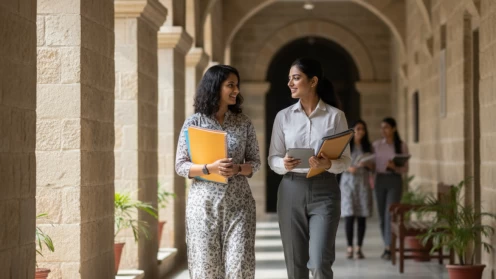
If you are considering a meaningful career in the field of mental health, education, or social work, a Distance Postgraduate (PG) Diploma in Guidance and Counselling could be your stepping stone. This programme is specially crafted to impart in-depth knowledge of psychological principles, guidance strategies, and counselling skills, all through the flexible mode of distance education. The curriculum is designed to prepare you to support individuals—be it students, parents, or professionals—in navigating personal, educational, and vocational challenges.
One of the chief benefits of this diploma is the flexibility it offers. You can balance your studies with professional or personal commitments, thanks to the remote learning format. Despite being a distance course, many universities blend theoretical learning with practical exposure, ensuring you gain holistic expertise.
The PG Diploma in Guidance and Counselling emphasises not only academic rigour but also real-world application. Through a mix of assignments, case studies, and (in many cases) fieldwork or internships, you will learn to address diverse issues such as career guidance, educational counselling, behavioural problems, and crisis intervention.
This course serves as a credible qualification for those aspiring to become guidance counsellors in schools, colleges, NGOs, rehabilitation centres, or even in independent practice. It opens doors to a rewarding profession aimed at fostering well-being and personal growth in others.
Course Recognition and Approval Status
When choosing a distance education programme, recognition and approval status are paramount. The Distance PG Diploma in Guidance and Counselling offered by reputed Indian universities adheres to the norms set by the University Grants Commission (UGC) and the Distance Education Bureau (DEB). These regulatory authorities ensure that the curriculum, delivery standards, and assessment protocols meet national benchmarks for higher education.
Some universities also align their curriculum with guidelines from the National Council of Educational Research and Training (NCERT), which lends additional weight to the qualification, especially in educational settings. In select cases, where the programme is clinically oriented, the Rehabilitation Council of India (RCI) standards may also be followed—particularly relevant if you aim to work in the rehabilitation sector.
It is crucial to verify the recognition status of your chosen university and course before enrolling. A programme approved by UGC and DEB ensures your diploma is legitimate, widely accepted, and valued by employers in both government and private sectors across India.
With such regulatory backing, the diploma holds strong academic and professional credibility, enabling seamless progression to advanced degrees or direct entry into the workforce.
Eligibility Criteria and Duration
The eligibility norms for the Distance PG Diploma in Guidance and Counselling are straightforward, making it accessible to a broad spectrum of graduates. Typically, you must possess a Bachelor’s degree in any stream—be it Arts, Science, Commerce, or Engineering—from a recognised Indian university. While some universities may prefer applicants from fields like Psychology, Education, or Social Work, most do not restrict admission exclusively to those backgrounds.
This inclusivity allows aspiring counsellors from diverse educational journeys to enter the field, bringing with them unique perspectives and skills. Whether you are a fresh graduate or a working professional seeking career advancement or a shift, you are eligible to apply, provided you meet the basic academic requirements.
The course duration is typically one year, split into two semesters. This concise timeframe enables you to quickly gain specialised knowledge and enter the workforce or enhance your existing role.
In rare cases, universities may allow a short extension for completing assignments or practical components, but the standard duration remains one year. This structure ensures efficient learning without compromising the depth of the subject matter.
Who Should Consider This Course?
If you are passionate about helping others, interested in human behaviour, and keen to make a tangible difference in people’s lives, this diploma is an ideal choice. The course is particularly suitable for:
- Teachers and educators aiming to add counselling to their skill set.
- Graduates in Psychology, Education, Social Work, or related fields seeking domain expertise.
- Professionals from any discipline who wish to transition into guidance and counselling.
- Individuals aspiring to work in educational institutions, NGOs, community organisations, or private counselling practice.
- Those aiming for personal growth and better understanding of interpersonal relationships.
Even if you are already employed, this distance mode allows you to upgrade your qualifications without interrupting your career. The course is also recommended for those seeking to meet the growing demand for certified counsellors in schools and colleges, as per CBSE/ICSE guidelines.
Ultimately, this diploma is a gateway for anyone with empathy, patience, and a desire to empower others through professional guidance and support.
Admission Process and Fee Details
The admission process for the Distance PG Diploma in Guidance and Counselling is designed to be student-friendly and accessible. Most universities accept online applications through their official websites. You will need to submit your academic transcripts, proof of identity, passport-size photographs, and, in some cases, a statement of purpose articulating your interest in counselling.
Once your application is reviewed and found eligible, you may be required to pay an application fee (usually nominal). Upon selection, the course fee must be paid as per the university’s guidelines. The typical fee range is between ₹10,000 and ₹40,000, depending on the university, the infrastructure provided, and the nature of practical components.
Some universities offer instalment payment options, scholarships, or fee concessions for candidates from reserved categories, economically weaker sections, or persons with disabilities. Always check with the respective university’s admission office for the most updated details and student support schemes.
After successful enrolment, you will receive your study material, access to e-learning portals, and a schedule for virtual classes, assignments, and practical sessions (if applicable).
Hidden Costs or Practical Requirements
While most distance education programmes are cost-effective, it is wise to anticipate any additional expenses. Some universities might charge extra for practical workshops, field visits, or internship facilitation. These costs, if any, are usually disclosed upfront during admission but always clarify this with the admissions office.
Practical requirements are an integral part of this diploma, as real-world exposure is essential for developing effective counselling skills. You may need to participate in:
- Fieldwork or internships in educational institutions, NGOs, or community centres.
- Workshops on counselling techniques, testing, and psychological assessment.
- Interactive online sessions or webinars with subject experts and mentors.
For working professionals, universities are often flexible in scheduling practicals or allowing you to complete them at your place of employment, provided it is relevant. Ensure you are clear about the time and effort required for these components, as they are critical for your professional competence.
There are generally no hidden academic costs, but you might incur expenses for internet access, printing assignments, travel for fieldwork, or resource materials not included in the standard fee.
Syllabus and Core Subjects
The syllabus for the Distance PG Diploma in Guidance and Counselling typically covers a broad spectrum of relevant topics. While the exact modules may vary by university, the core subjects usually include:
- Foundations of Guidance and Counselling: History, principles, and scope of guidance and counselling services.
- Psychological Assessment and Testing: Understanding and administering basic psychological tests and interpreting results.
- Counselling Techniques and Skills: Building rapport, communication skills, therapy models, and intervention strategies.
- Career Guidance and Vocational Counselling: Assessing aptitudes, interests, and guiding individuals in educational and career choices.
- Child and Adolescent Counselling: Addressing developmental issues, behavioural challenges, and school-related concerns.
- Group Guidance: Methods and dynamics of conducting group counselling sessions.
- Fieldwork/Internship: Application of theoretical knowledge in real-life settings.
- Research Methods in Counselling: Basics of research design, data collection, and interpretation.
These modules are supported by assignments, case studies, and practical exposure to ensure you gain hands-on experience and are ready for the dynamic challenges of the field.
Career Scope and Salary Potential
Upon successful completion, a wide array of career opportunities await you. Certified guidance counsellors are in high demand in schools, colleges, universities, and educational consultancies across India. With the increasing emphasis on mental health and student well-being, educational boards are encouraging institutions to employ trained counsellors, making this diploma highly relevant.
Beyond academia, you can work with NGOs, community health organisations, rehabilitation centres, and private counselling setups. Some diploma holders even establish their own counselling practices, especially after gaining a few years of experience or further certifications.
The starting salary for a guidance counsellor in India typically ranges from ₹2.5 lakh to ₹4 lakh per annum. With experience, additional certifications, or higher degrees, your earning potential can rise significantly, especially if you move into supervisory roles or specialised areas such as career counselling, child psychology, or mental health advocacy.
Moreover, the emotional and social rewards of this profession are immense, as you contribute directly to individual and community well-being.
Common Myths and Misunderstandings
There are several misconceptions surrounding the Distance PG Diploma in Guidance and Counselling that deserve clarification:
- Myth: Only graduates in Psychology can apply.
Fact: Candidates from any academic background with a Bachelor’s degree can pursue this diploma. - Myth: Distance education lacks personal interaction.
Fact: Many universities offer interactive online sessions, mentorship, and fieldwork, ensuring direct engagement with faculty and peers. - Myth: A PG Diploma holds less value than a Master’s degree.
Fact: This diploma provides credible, employment-oriented qualifications and is recognised in educational and social sectors. - Myth: There are no practical components in distance education.
Fact: Most universities include mandatory fieldwork, internships, or practical workshops to ensure comprehensive training.
Dispelling these myths can help you make an informed decision and approach your studies with confidence.
Top Institutes Offering This Course
Several Indian universities offer the Distance PG Diploma in Guidance and Counselling, each recognised by UGC and following DEB norms. Here are some leading options:
| University | Website | Duration | Eligibility | Approx Fees (₹) | Recognition | Practical Component |
|---|---|---|---|---|---|---|
| Indira Gandhi National Open University (IGNOU) | ignou.ac.in | 1 year | Bachelor's in any discipline | 12,600 | UGC | Field projects |
| University of Madras | unom.ac.in | 1 year | Bachelor's (Science/Social Science) | 18,000 | UGC | Fieldwork |
| Sri Aurobindo Institute of Education | sau.edu.in | 1 year | Bachelor's in relevant fields | 25,000 | UGC, NCERT | Workshops, internships |
| Karnataka State Open University (KSOU) | ksoumysore.karnataka.gov.in | 1 year | Bachelor's in any stream | 15,000 | UGC | Internship |
These institutions are known for their academic excellence, comprehensive support, and robust practical exposure. You are advised to visit the official websites for detailed admission procedures, updated fee structures, and specific course highlights.
In conclusion, a Distance PG Diploma in Guidance and Counselling from a recognised Indian university is a gateway to a fulfilling career in the helping professions. With the right blend of theoretical knowledge, practical experience, and regulatory recognition, you will be well-equipped to make a positive difference in society.