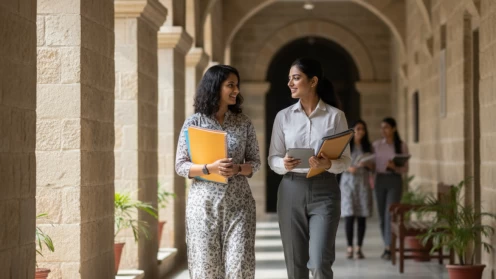
Choosing the right MBA programme in Accounting and Finance is a significant decision for your career. In India, UGC and Distance Education Bureau (DEB) norms govern the recognition and quality of degrees offered in Regular, Distance, and Online modes. Here is a clear comparison to help you make an informed choice:
| Mode | Typical Fees (Approx.) | Class Timings | Attendance | Exam Centres | Certificate Mention | Best For |
|---|---|---|---|---|---|---|
| Regular MBA | ₹80,000 – ₹2,00,000 (total) | Weekdays, daytime (usually 9 AM – 5 PM) | Mandatory (typically 75%) | On Campus | No mention of mode | Fresh graduates, those seeking campus life |
| Distance MBA | ₹35,000 – ₹50,000 (total) | Flexible; self-paced, occasional weekend sessions | Not compulsory | Designated centres | May mention 'Distance Mode' | Working professionals, those needing flexibility |
| Online MBA | ₹1,00,000 – ₹2,00,000 (total) | Highly flexible; live & recorded sessions | Often tracked online (varies) | Online or on campus | No mention of mode (in most cases) | Remote learners, tech-savvy professionals |
Learning Flexibility Differences (Attendance & Schedules)
One of the most crucial factors when choosing an MBA programme is how it fits into your daily routine. Regular MBA courses in India are structured and require your physical presence on campus. Classes are usually scheduled during the day, Monday to Friday, and attendance is mandatory, with most universities requiring at least 75% attendance to qualify for examinations. This structure is ideal if you thrive in a disciplined, face-to-face learning environment.
Distance MBA programmes, as offered by institutions like IGNOU and Symbiosis Centre for Distance Learning, provide maximum flexibility. Most learning is self-paced, and you receive printed or digital study materials. While some universities may conduct weekend workshops or contact classes, attendance is not typically monitored. This mode is especially suited for those balancing work or family commitments.
Online MBA programmes, such as those from NMIMS, combine flexibility with interactivity. You can attend live lectures or watch recorded sessions at your convenience. Some universities track engagement through online attendance, participation in discussions, and assignment submissions. This mode is well-suited for tech-savvy learners who prefer structured content but cannot commit to a fixed daily schedule.
Exam formats also differ: Regular MBAs hold exams on campus, Distance MBAs at designated centres, and Online MBAs may conduct proctored online exams or require campus visits. Always verify exam logistics with your preferred university.
Curriculum & Syllabus Depth (Is Regular Harder?)
The core syllabus of MBA Accounting and Finance is broadly similar across all UGC-approved modes, focusing on essential business and finance concepts. However, the depth and delivery may vary:
- Regular MBA: More rigorous due to daily classes, real-time projects, group discussions, seminars, and continuous assessments. Peer learning and faculty interactions are a significant part of the experience.
- Distance MBA: The syllabus covers similar subjects, such as Financial Accounting, Corporate Finance, Cost Management, and Strategic Management. However, the responsibility for learning rests primarily on you, with fewer opportunities for classroom debates or instant feedback.
- Online MBA: Offers interactive modules, case studies, live projects, and industry webinars. The quality of learning depends greatly on your engagement and the university’s digital infrastructure.
Key subjects typically covered:
- Financial Accounting
- Management Accounting
- Corporate Finance
- Financial Markets and Institutions
- Cost and Management Accounting
- Taxation
- Strategic Financial Management
- Business Laws and Ethics
- Investment Analysis
- Project and Risk Management
While the academic difficulty is highest in regular mode due to stringent schedules, the actual subject content is comparable across all three modes.
Peer Learning & Networking (Campus vs Virtual)
Networking is a cornerstone of any MBA programme. In Regular MBAs, you benefit from direct, daily interaction with classmates, faculty, and visiting industry experts. Group projects, seminars, and social events foster relationships that can be invaluable throughout your career. Alumni networks from major universities like the University of Mumbai are robust and highly active.
Distance MBA students, in contrast, have limited opportunities for networking. While some universities organise contact programmes or workshops, interaction is mostly restricted to online forums or occasional meetings. Building professional relationships requires extra effort and initiative from your side.
Online MBAs offer a middle path. Through virtual classrooms, webinars, and discussion boards, you can interact with faculty and peers from across India. Many institutions now facilitate online group projects and alumni meetups, making networking accessible even remotely. However, the quality and frequency of these interactions depend on both the university’s platform and your personal involvement.
In summary, if building a strong professional network is a top priority, Regular MBA offers the richest experience, followed by Online, then Distance mode.
Cost Effectiveness (Which Mode Saves More Money?)
Cost is a decisive factor for most students. Regular MBA programmes typically command the highest fees, especially at premier universities. For example, the University of Mumbai’s regular MBA can cost around ₹80,000 to ₹2,00,000 for the full duration, excluding additional expenses like hostel, travel, and materials.
Distance MBAs are the most economical, with IGNOU charging approximately ₹37,800 for the entire programme and Symbiosis Centre for Distance Learning around ₹42,000. These programmes are designed for affordability, making them accessible to a wider segment of students, especially those already working.
Online MBAs fall between the two. For instance, NMIMS’s online MBA in Accounting and Finance is priced at approximately ₹1,80,000 for the complete programme. The fee includes access to digital resources, live classes, and online assessments, making it a balanced choice if you seek quality with flexibility.
When considering cost, also factor in indirect expenses such as commuting, accommodation, and loss of income if you need to leave a job to pursue a Regular MBA. Distance and Online MBAs allow you to continue working, enhancing their cost-effectiveness.
Certificate Value in the Market (Recruiter Perception)
The value of your MBA degree in the job market depends on both the university’s reputation and the mode of study. UGC and DEB norms ensure that all approved programmes—Regular, Distance, and Online—are valid and recognised for employment and further studies in India.
Regular MBA certificates do not mention the mode of study, which is often preferred by recruiters who value traditional campus-based learning and its associated rigour. Graduates from well-known institutions often find it easier to access campus placements and alumni networks.
Distance MBA certificates may state 'Distance Mode', which can sometimes carry a stigma in certain sectors. However, this perception is gradually changing as more professionals opt for distance education to balance work and studies. Government jobs and many private sector roles accept UGC-DEB approved distance degrees.
Online MBA certificates (from UGC-DEB approved universities) typically do not mention the mode, and are increasingly accepted by employers, especially in technology, finance, and consulting sectors. The key is to select a university with strong industry connections and a history of successful alumni.
Ultimately, your skills, experience, and how you leverage your MBA matter more than the mode of study, especially as recruiters become more open to diverse educational backgrounds.
Which Mode Fits Your Lifestyle? (Final Verdict)
Choosing between Distance, Online, and Regular MBA in Accounting and Finance depends largely on your personal circumstances and career aspirations.
If you are a recent graduate looking to immerse yourself in a vibrant campus environment, build lifelong networks, and can commit fully to studies, a Regular MBA is likely your best fit. The structured routine and face-to-face mentorship can be transformative at this stage.
If you are a working professional, a Distance MBA offers unmatched flexibility and affordability. You can study at your own pace, balance family or job commitments, and still earn a recognised degree. However, you will need to be highly self-motivated and proactive about networking.
Online MBAs are ideal for those who value flexible schedules but also want interactive learning and access to digital resources. If you are comfortable with technology, enjoy virtual collaboration, and seek a balance between flexibility and structure, this mode serves well.
In all cases, ensure the university and programme are UGC-DEB approved, review the curriculum, faculty profile, and support services before making your decision. Remember, an MBA is not just a qualification—it is an investment in your future skills and professional network.